
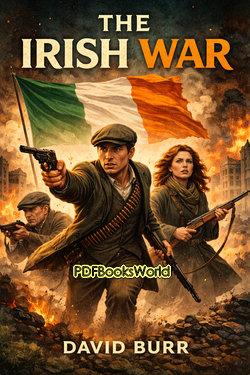
The Irish War
by David Burr
Conflict, Nationalism, and Struggle in Modern Irish History
The Irish War by David Burr is a historical account examining the political violence, military conflict, and national tensions surrounding Ireland’s struggle for independence during the early twentieth century. The work explores the causes, events, and consequences of the conflict while reflecting upon the emotional and social divisions created by revolution, resistance, and political change.
Burr presents the Irish conflict not simply as military warfare, but as a struggle shaped by nationalism, historical grievances, political identity, and competing visions of Ireland’s future.
The Background of the Conflict
The book discusses the growing tensions between Irish nationalist movements and British authority during the years leading to armed conflict. Political frustration, demands for self-government, and reactions to earlier rebellions gradually intensified into organized resistance and revolutionary activity.
Burr describes the violence, uncertainty, and political instability affecting towns, rural communities, and ordinary civilians caught between opposing forces. Guerrilla warfare, reprisals, and military operations created an atmosphere of fear and emotional strain across Ireland.
Rather than portraying the conflict as simple heroism or villainy, the narrative acknowledges the complexity and tragedy surrounding political violence and national division.
War and National Identity
A major theme throughout the book is the connection between national identity and political struggle. Burr repeatedly explores how historical memory, language, religion, and cultural tradition influenced the desire for Irish independence.
The work also reflects broader twentieth-century concerns regarding colonialism, revolution, and the right of nations to self-determination. At the same time, it examines the heavy human cost of prolonged violence and political extremism.
This mixture of political history and social reflection gives the work lasting historical significance.
Historical Themes Explored Throughout the Book
- Irish Nationalism: The struggle for independence shapes political and military conflict.
- Colonial Tension and Resistance: Opposition to British rule becomes increasingly organized and violent.
- Guerrilla Warfare and Political Violence: Irregular conflict creates instability and fear.
- National Identity and Cultural Memory: History and tradition influence political movements.
- The Human Cost of Conflict: Ordinary civilians suffer alongside political and military leaders.
David Burr’s Historical Writing Style
The Irish War demonstrates David Burr’s direct and informative historical approach. The writing remains serious, descriptive, and strongly focused upon explaining the political events and emotional tensions shaping the conflict.
Burr consistently presents Irish history as deeply connected with questions of identity, justice, and political power.
Why the Book Still Holds Historical Interest
Modern readers continue finding The Irish War valuable because the issues surrounding nationalism, political violence, and independence movements remain relevant in many parts of the world today. The work also provides insight into one of the most important and emotionally charged conflicts in modern Irish history.
Its themes of revolution, national identity, political struggle, and historical memory continue appealing to readers interested in Irish history, twentieth-century politics, military conflict, and European historical studies.
Similar Genres
About the Author
David Burr was a historian and author whose writings focused on military history, political conflict, and the forces that shaped nations during times of upheaval. His work sought to present complex historical events in a clear and engaging manner, helping readers understand not only the battles themselves but also the political, social, and human factors behind them. Explore David Burr books to discover the author's life, literary career, and access notable works.