
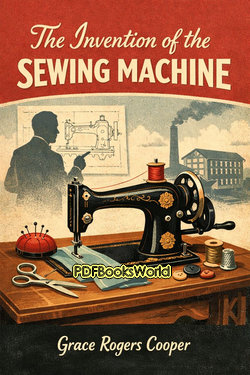
The Invention of the Sewing Machine
by Grace Rogers Cooper
The Invention of the Sewing Machine: How One Machine Changed Everyday Life
Before sewing machines existed, making clothes was slow, tiring, and completely done by hand. A single dress or coat could take many hours or even days to finish. The invention of the sewing machine changed all of that forever.
The Invention of the Sewing Machine by Grace Rogers Cooper explores the fascinating story behind one of the most important inventions of the 19th century. Instead of focusing on only one inventor, the book explains how many inventors, mechanics, and business owners helped improve sewing technology over time.
This historical work gives readers a detailed look at innovation, industrial growth, and the rise of modern manufacturing.
Why the Sewing Machine Was Revolutionary
Today, sewing machines may seem ordinary, but when they first appeared, they completely transformed society. The machine helped people make clothing faster, cheaper, and more efficiently than ever before.
The invention affected many industries, including:
- Clothing manufacturing
- Shoe production
- Military uniform production
- Textile factories
- Home sewing businesses
It also changed daily life for families and workers around the world.
What the Book Covers
Grace Rogers Cooper carefully traces the history of sewing technology from early experiments to successful commercial machines.
The book explains:
- How early inventors struggled to create working models
- The competition between inventors and companies
- The role of patents in the sewing machine industry
- How sewing machines became affordable for ordinary families
- The economic impact of mass production
Readers also learn about famous inventors such as Elias Howe and Isaac Singer, whose improvements helped popularize the machine.
Interesting Facts From the History of Sewing Machines
Many Inventors Contributed
One of the book’s main ideas is that no single person fully invented the sewing machine. Instead, the final machine was created through years of experimentation and improvement by many individuals.
Early Machines Were Expensive
The first sewing machines cost a great deal of money. However, people quickly realized the machines could save enormous amounts of time and labor.
Factories Grew Rapidly
Once sewing machines became common, factories were able to produce clothing much faster. This helped grow the ready-made clothing industry.
Workers Feared Losing Jobs
Some hand sewers worried the machines would replace their work. Similar fears often appear whenever new technology changes industries.
Key Themes in the Book
Innovation and Persistence
The development of the sewing machine required patience, experimentation, and constant improvement. Many inventors failed before practical machines were finally created.
Industrial Progress
The book highlights how inventions can reshape economies and societies. The sewing machine became one of the driving forces behind industrial expansion.
Technology and Everyday Life
Unlike some inventions used only in factories, sewing machines entered homes and changed daily routines for millions of people.
Why This Book Still Matters Today
Even though modern technology has advanced far beyond early sewing machines, the story behind the invention remains important.
The book helps readers understand:
- How technological innovation develops over time
- The relationship between invention and business
- The social effects of industrial change
- The importance of manufacturing in modern history
It also reminds readers that many inventions we now take for granted once seemed extraordinary.
Writing Style and Reading Experience
Grace Rogers Cooper presents historical information in a detailed yet organized way. The book combines technical explanations with historical storytelling, making it useful for both researchers and general readers.
Readers interested in history, engineering, textiles, or industrial development may especially enjoy this work.
The book includes:
- Historical explanations
- Patent information
- Inventor biographies
- Industry history
- Descriptions of early machine designs
Who Should Read This Book?
The Invention of the Sewing Machine is a good choice for readers who enjoy:
- History of inventions
- Industrial history
- Technology and engineering topics
- Fashion and textile history
- American manufacturing history
Students and history enthusiasts may also find the book valuable because it explains how innovation develops through collaboration and competition.
Final Thoughts
The Invention of the Sewing Machine by Grace Rogers Cooper is more than a history of one machine. It is the story of creativity, persistence, and technological change during a major period of industrial growth.
The book shows how a simple mechanical invention transformed factories, homes, and entire industries. By exploring the people and ideas behind the sewing machine, readers gain a deeper understanding of how innovation can shape the modern world.
For anyone interested in inventions, history, or the development of everyday technology, this book offers an informative and engaging reading experience.
Similar Genres
About the Author
Grace Rogers Cooper (1925–2003) was an American historian, museum curator, and author best known for her research on the history of textiles, clothing, and sewing technology. As a curator at the Smithsonian Institution, she devoted many years to studying the development of sewing machines and their impact on everyday life. Explore Grace Rogers Cooper books to discover the author's life, literary career, and access notable works.