
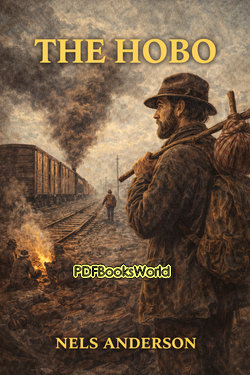
The Hobo: The Sociology of the Homeless Man
by Nels Anderson
Understanding Life on the Margins of Society
The Hobo: The Sociology of the Homeless Man by Nels Anderson is a groundbreaking social study that examines the lives, experiences, and communities of homeless and itinerant workers in early twentieth-century America. First published as an academic investigation, the book remains one of the most influential works in urban sociology. Rather than relying on stereotypes or assumptions, Anderson sought to understand the realities of people who lived outside conventional social and economic structures.
Through observation, interviews, and firsthand research, the author presents a detailed portrait of a group that was often misunderstood or ignored. The result is a work that combines social analysis with human stories, helping readers better understand a significant aspect of American social history.
A New Approach to Studying Society
At a time when homelessness and transient labor were frequently viewed through a lens of prejudice, Anderson approached the subject with curiosity and respect. He examined the daily lives of hoboes, their methods of travel, sources of employment, social networks, and the challenges they faced while moving from place to place.
This research became an important example of how sociology could be used to study real communities and social issues. By focusing on lived experiences rather than assumptions, Anderson provided valuable insights into a largely overlooked population.
Who Were the Hoboes?
More Than a Popular Stereotype
The book distinguishes between various groups often grouped together under similar labels. Anderson explains that many hoboes were migrant workers who traveled in search of temporary employment. Their lifestyle was influenced by economic conditions, seasonal labor opportunities, and broader social changes occurring across the country.
Rather than portraying them as a uniform group, the author highlights the diversity of backgrounds, motivations, and experiences found among those living on the road.
Key Topics Explored in the Study
- Transient Labor: The relationship between mobility and employment opportunities.
- Homeless Communities: Informal social structures that developed among itinerant populations.
- Urban Life: The role of cities as centers of opportunity and survival.
- Social Attitudes: Public perceptions of homelessness and poverty.
These subjects help readers understand the economic and social forces that shaped the lives of many individuals during the period.
The Human Side of Social Research
Stories Behind the Statistics
One of the book's greatest strengths is its focus on people rather than numbers alone. Anderson presents the experiences of individuals who navigated uncertainty, economic hardship, and social exclusion. Their stories reveal resilience, adaptability, and the desire to find work and stability despite difficult circumstances.
This human-centered approach allows readers to connect with the subjects of the study and better appreciate the complexity of their lives.
Lessons That Remain Relevant Today
- Social Issues Are Complex: Homelessness often results from multiple interconnected factors.
- Empathy Matters: Understanding people's experiences can challenge misconceptions.
- Economic Conditions Shape Lives: Employment opportunities and social systems influence personal outcomes.
- Research Can Drive Understanding: Careful observation helps reveal realities that stereotypes often hide.
These lessons continue to resonate in contemporary discussions about housing, poverty, labor, and social policy.
A Landmark in Urban Sociology
The Lasting Influence of Nels Anderson
Nels Anderson's work became a foundational text within sociology and contributed significantly to the development of urban studies. His methods demonstrated the value of field research and direct engagement with communities. Many later sociologists built upon the approaches introduced in this study.
By documenting a frequently overlooked population, Anderson expanded public understanding of social diversity and economic hardship.
Why The Hobo Still Deserves Attention
The Hobo: The Sociology of the Homeless Man remains an important and insightful examination of homelessness, labor, and social organization. Through careful research and compassionate observation, Nels Anderson created a work that continues to inform students, historians, and general readers. Its exploration of life on society's margins offers valuable historical perspective while raising questions that remain relevant in the modern world.
Similar Genres
About the Author
Nels Anderson was an American sociologist whose pioneering research transformed the academic study of homelessness, urban communities, and marginalized populations. As one of the leading scholars associated with the Chicago School of Sociology, he emphasized firsthand observation and field research to understand the realities of everyday life. Explore Nels Anderson books to discover the author's life, literary career, and access notable works.