
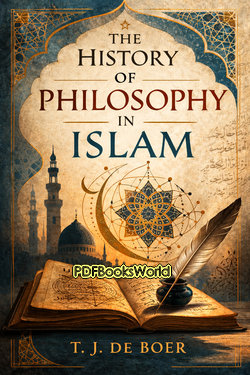
The History of Philosophy in Islam
by T. J. de Boer
An Influential Survey of Islamic Philosophical Thought
The History of Philosophy in Islam by T. J. de Boer is a scholarly introduction to the development of philosophy within the Islamic world. The book traces the growth of intellectual traditions from the early centuries of Islam through the contributions of major philosophers, theologians, scientists, and commentators. By examining the interaction between Greek philosophy and Islamic thought, de Boer presents a comprehensive account of one of the most important chapters in the history of ideas.
The Rise of Philosophy in the Islamic World
Following the rapid expansion of Islamic civilization, scholars gained access to a vast body of knowledge from Greece, Persia, India, and other cultures. Through translation, study, and interpretation, Muslim thinkers engaged with philosophical questions concerning existence, knowledge, ethics, and the nature of reality.
This intellectual activity helped create a vibrant tradition of philosophical inquiry.
Major Subjects Covered
- Greek Influence: The transmission of classical philosophy into the Islamic world.
- Theology and Reason: Efforts to reconcile faith with philosophical investigation.
- Metaphysics: Questions concerning reality, existence, and the divine.
- Logic and Knowledge: Studies of reasoning and human understanding.
- Scientific Thought: Contributions to mathematics, astronomy, medicine, and natural philosophy.
Translation and Intellectual Exchange
A crucial stage in the history of Islamic philosophy was the translation movement, during which important Greek works were rendered into Arabic. The writings of philosophers such as Aristotle and Plato became available to scholars who not only preserved them but also developed original interpretations and new ideas.
This process helped shape the intellectual landscape of the medieval world.
Major Philosophers Discussed
The book examines influential thinkers including Al-Kindi, Al-Farabi, Avicenna, Al-Ghazali, and Averroes. Their works addressed questions of logic, metaphysics, ethics, and the relationship between revelation and reason.
Each contributed significantly to the development of Islamic intellectual life.
Faith and Philosophy
One of the central themes explored by de Boer is the relationship between religious belief and rational inquiry. Islamic philosophers and theologians frequently debated the extent to which reason could be used to understand divine truths and interpret religious teachings.
These discussions produced some of the most sophisticated philosophical arguments of the medieval era.
The Influence on Europe
Islamic philosophy played an important role in the transmission of knowledge to medieval Europe. Through translations from Arabic into Latin, the works of Muslim philosophers influenced Christian scholars and contributed to the intellectual revival that preceded the Renaissance.
The book highlights these connections and their historical significance.
A Historical Perspective on Philosophy
Although written from the perspective of an early twentieth-century scholar, the book remains valuable as an overview of the major developments and figures in Islamic philosophy. Readers gain an appreciation for the diversity and richness of a tradition that extended across centuries and continents.
The work serves as a gateway to a vast field of study.
Why the Book Remains Important
Students of philosophy, religious studies, history, and intellectual culture continue to find the book useful. It introduces readers to thinkers whose ideas shaped not only Islamic civilization but also broader currents of world philosophy.
Its emphasis on intellectual exchange and philosophical inquiry remains highly relevant.
A Valuable Introduction to Islamic Intellectual History
The History of Philosophy in Islam provides a clear and informative account of one of the world's great philosophical traditions. Through discussions of major thinkers, theological debates, and the transmission of knowledge, T. J. de Boer reveals the depth and influence of Islamic philosophy. The book remains an important resource for understanding the development of ideas that helped shape both the Islamic world and global intellectual history.
Similar Genres
About the Author
T. J. de Boer, or Titus Jan de Boer, was a Dutch philosopher, Orientalist, historian of philosophy, and respected academic whose scholarship helped introduce Islamic philosophy to a wider Western audience. Through careful research and clear interpretation, he examined the development of philosophical thought in the Islamic world and highlighted its profound influence on the history of ideas. Explore T. J. de Boer books to discover the author's life, literary career, and access notable works.