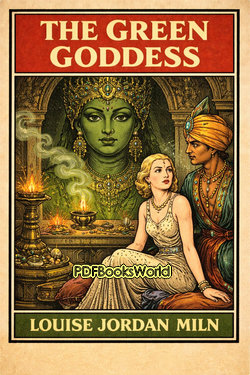
The Green Goddess
by Louise Jordan Miln
Mysticism, Isolation, and Cultural Collision in a Remote Himalayan Kingdom
Hidden mountain kingdoms, political danger, spiritual symbolism, and tense human relationships shape the dramatic atmosphere of The Green Goddess by Louise Jordan Miln and William Archer. Blending adventure, psychological tension, romance, and theatrical drama, the work unfolds within an isolated Himalayan setting where outsiders become trapped amid unfamiliar customs, political uncertainty, and emotional conflict.
The story reflects early twentieth-century fascination with exotic locations, mysticism, and encounters between Western travelers and distant cultures.
An Isolated Kingdom Filled With Uncertainty
The drama begins when unexpected circumstances force travelers into a remote mountain kingdom cut off from ordinary political and social life.
Isolation immediately creates tension. The characters cannot easily escape, and every interaction becomes charged with uncertainty and hidden motive.
The surrounding landscape of mountains, temples, and remote settlements intensifies the sense of separation from the modern world.
The setting itself becomes central to the emotional atmosphere of the story.
The Meaning of the “Green Goddess”
The title carries symbolic and spiritual significance throughout the work. The “Green Goddess” suggests mystery, worship, beauty, power, and emotional fascination.
The image operates on several levels:
- Religious and mystical symbolism
- The attraction of the unknown
- Emotional obsession and desire
- The clash between rational thought and spiritual imagination
This layered symbolism gives the drama psychological depth beyond simple adventure storytelling.
Conflict Between Cultures and Values
Much of the tension emerges from encounters between characters shaped by very different cultural assumptions and worldviews.
The story reflects Western fascination with Asian spirituality and “exotic” environments common in literature of the period.
Modern readers may recognize colonial attitudes and romanticized portrayals within the narrative, yet the work also explores how unfamiliar settings can challenge personal certainty and emotional control.
The foreign environment becomes both alluring and threatening.
Drama Built on Emotion and Suspense
The work relies heavily on emotional intensity rather than large-scale action alone.
Characters confront:
- Fear and uncertainty
- Conflicted loyalty and attraction
- Political danger
- The psychological pressure of isolation
Conversations and personal interactions often carry hidden emotional tension beneath outward politeness.
Theatrical Origins and Narrative Style
The Green Goddess originated as a dramatic work for the stage, and its theatrical roots remain visible throughout the dialogue and structure.
Scenes frequently emphasize mood, confined settings, dramatic confrontation, and symbolic imagery.
The language balances emotional seriousness with moments of mystery and exotic atmosphere.
This theatrical quality contributes strongly to the work’s distinctive mood.
Why The Green Goddess Still Attracts Readers
The Green Goddess remains interesting because it combines psychological drama, symbolic storytelling, and atmospheric adventure within an unusual and isolated setting.
For readers interested in early twentieth-century theater, exotic adventure fiction, psychological tension, and cross-cultural literary themes, the work offers a fascinating mixture of mysticism, suspense, and emotional conflict set against the dramatic backdrop of the Himalayas.
Similar Genres
About the Author

Louise Jordan Miln was an American-born novelist, travel writer, and essayist whose vivid fiction and travel narratives introduced readers to the cultures, traditions, and landscapes of East Asia during the late nineteenth and early twentieth centuries. Born in Illinois in 1864, Miln spent many years living in Japan, China, and Korea alongside her husband, a British military officer. Explore Louise Jordan Miln books to discover the author's life, literary career, and access notable works, including Mr. Wu , and more.