
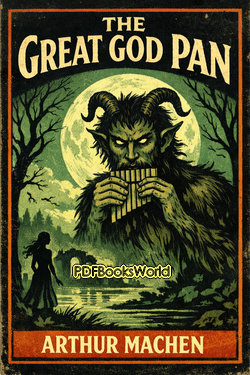
The Great God Pan
by Arthur Machen
A Chilling Gothic Horror Story Filled With Mystery, Madness, and the Supernatural
The Great God Pan by Arthur Machen is one of the most influential works of supernatural horror in English literature. Combining Gothic atmosphere, psychological terror, ancient mythology, and unsettling mystery, the novella explores dangerous hidden knowledge and the terrifying possibility that unseen realities exist beyond ordinary human understanding.
First published in the late nineteenth century, the story shocked many readers because of its disturbing themes and eerie sense of horror. Over time, it became recognized as a masterpiece of weird fiction and an important influence on later horror writers.
A Dangerous Scientific Experiment
The story begins with a strange experiment conducted by Dr. Raymond, a scientist obsessed with uncovering hidden dimensions of reality. He believes human beings are unable to perceive the full truth about existence because their minds are naturally limited.
To overcome these limits, he performs a risky operation on a young woman named Mary, hoping to open her mind to supernatural knowledge connected with the mysterious figure known as Pan.
The experiment leads to horrifying consequences that continue to affect the lives of multiple characters long afterward.
Main Characters
- Dr. Raymond, the scientist seeking forbidden knowledge
- Mary, the young woman subjected to the dangerous experiment
- Helen Vaughan, a mysterious and deeply unsettling figure connected to the supernatural events
- Investigators and observers attempting to understand the growing horror surrounding the mystery
These characters help create the atmosphere of uncertainty and psychological fear that defines the story.
The Horror of Hidden Reality
One of the novella’s most powerful ideas is the fear that human beings may not fully understand the true nature of reality. Machen suggests that hidden spiritual or supernatural forces exist beyond normal perception.
The story uses mystery and implication rather than direct explanation, allowing fear to grow gradually through atmosphere and imagination. Much of the horror comes from what remains unseen or only partially understood.
This psychological and cosmic approach strongly influenced later horror literature.
Main Themes Explored in the Novella
- Forbidden knowledge and dangerous curiosity
- The limits of human understanding
- Madness, fear, and psychological horror
- Ancient mythology and supernatural evil
These themes helped establish the novella as a major work of Gothic and weird fiction.
The Writing Style of Arthur Machen
Arthur Machen writes with rich atmosphere, subtle symbolism, and slow-building psychological tension. His descriptions create a constant feeling of unease and mystery rather than relying on direct violence or obvious horror.
The story moves through fragmented accounts, conversations, and discoveries that gradually reveal disturbing truths. This structure increases suspense while preserving the mystery surrounding the supernatural events.
Machen’s ability to combine beauty, terror, and ambiguity gives the novella its lasting power.
Why The Great God Pan Still Influences Horror Fiction
The Great God Pan remains important because it helped shape modern supernatural and psychological horror. Its themes of hidden reality, forbidden knowledge, and cosmic fear later influenced writers such as H. P. Lovecraft and many others in the genre of weird fiction.
For readers interested in Gothic literature, supernatural horror, psychological mystery, and classic weird fiction, Arthur Machen’s novella remains one of the most haunting and influential horror stories ever written.
Similar Genres
About the Author
Arthur Machen was a Welsh author, journalist, and mystic whose imaginative fiction made him one of the most influential writers of supernatural and horror literature. He had a remarkable ability to blend mystery, folklore, and psychological suspense into stories that challenged readers to look beyond the ordinary world. Explore Arthur Machen books to discover the author's life, literary career, and access notable works.