
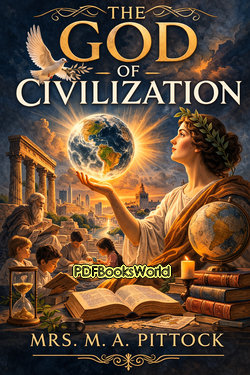
The God of Civilization: A Romance
by Mrs. M. A. Pittock
A Romantic Adventure with a Social Message
The God of Civilization: A Romance by Mrs. M. A. Pittock is an unusual blend of adventure, romance, social criticism, and utopian fiction. First published in 1890, the novel follows a young American woman whose desire for excitement leads her far beyond the comforts of her privileged life. What begins as a quest for adventure gradually develops into a story that questions wealth, social customs, and the values of so-called "civilized" society.
The novel stands out for its willingness to challenge conventional ideas about class, marriage, gender roles, and cultural superiority. Through an exotic island setting and an unconventional romance, Pittock explores alternative ways of organizing society and measuring human worth.
From San Francisco to the South Seas
The story begins with Mabel Miller, a wealthy young woman in San Francisco who has grown tired of parties, social obligations, and the routine pleasures of upper-class life. Seeking something more meaningful and exciting, she embarks on a voyage to Australia. What follows is a dramatic series of events that includes disaster at sea, survival, and discovery in a remote Pacific island world.
The contrast between Mabel's comfortable existence and the challenges she later encounters forms the foundation of her personal transformation.
Characters
- Mabel Miller: The adventurous heroine who seeks a life beyond the restrictions of wealthy society and becomes the central figure of the novel.
- Ahleka: A native island leader whose relationship with Mabel becomes a major focus of the story and challenges social expectations of the era.
- Lucy Maynard: Mabel's cousin, whose experiences provide a contrast to Mabel's choices and help illustrate the novel's social themes.
- Mr. Miller: Mabel's wealthy and caring father, whose concern for his daughter's happiness sets the adventure in motion.
The Meaning of the Title
The title refers to one of the novel's central arguments: that money has become the true "god" of modern civilization. Pittock repeatedly contrasts material wealth and social status with values such as love, happiness, freedom, and personal fulfillment. Through her characters and settings, she questions whether a society driven by wealth can truly be considered advanced.
This social criticism gives the novel a depth that extends beyond its romantic and adventurous plot.
Major Themes Found Throughout the Novel
- Freedom: Escaping restrictive social expectations.
- Love: Relationships that transcend cultural and social barriers.
- Social Criticism: Questioning the influence of wealth and status.
- Adventure: Personal growth through travel and unexpected challenges.
These themes help make the novel distinctive among nineteenth-century romances.
A Utopian Vision
Part of the novel's appeal lies in its depiction of an island society that operates according to principles different from those of contemporary American culture. Pittock uses this setting to explore alternative social arrangements and to examine issues of equality, personal choice, and happiness.
By contrasting two very different worlds, she encourages readers to reconsider assumptions about progress and civilization.
An Unconventional Romance
The romantic relationship at the center of the novel was particularly bold for its time. Pittock presents a cross-cultural love story that challenges social norms and prejudices prevalent in the late nineteenth century. This aspect of the book contributed to its originality and continues to attract scholarly interest today.
The romance serves not only as an emotional narrative but also as a vehicle for the novel's broader social commentary.
Why Readers Continue to Find the Novel Interesting
- Unique Premise: A blend of romance, adventure, and social critique.
- Historical Significance: An early example of utopian fiction.
- Memorable Heroine: A woman determined to shape her own destiny.
- Thought-Provoking Ideas: Questions about wealth, civilization, and happiness.
Why The God of Civilization Remains Worth Reading
The God of Civilization: A Romance is far more than a conventional love story. Through the adventures of Mabel Miller and her experiences in a very different society, Mrs. M. A. Pittock examines the values that shape human lives and challenges readers to think critically about wealth, social expectations, and personal freedom. Its combination of romance, adventure, and social commentary makes it a fascinating and distinctive work of nineteenth-century fiction.
Similar Genres
About the Author
Mrs. M. A. Pittock was an author whose fiction explored the relationship between society, morality, faith, and human ambition. Writing during a period of significant social and cultural change, she combined imaginative storytelling with thoughtful reflections on the values that shape civilization. Explore Mrs. M. A. Pittock books to discover the author's life, literary career, and access notable works.