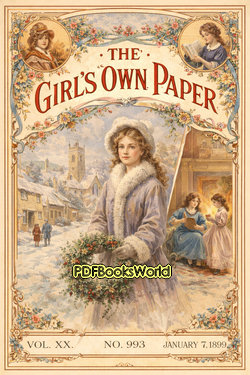
The Girl's Own Paper, Vol. XX, No. 993, January 7, 1899
by Various Authors
A Victorian Magazine for Education, Culture, and Entertainment
The Girl's Own Paper, Vol. XX, No. 993, January 7, 1899 is part of one of the most influential magazines produced for girls and young women during the late Victorian period. Published by the Religious Tract Society, the magazine combined fiction, educational essays, practical guidance, poetry, and cultural commentary, offering readers both entertainment and opportunities for self-improvement.
This issue reflects the publication's longstanding mission of encouraging intellectual growth, moral development, and personal refinement. Like many editions of the magazine, it presents a mixture of literary and educational content designed to appeal to readers seeking knowledge as well as enjoyment.
The Purpose of The Girl's Own Paper
First published in 1880, The Girl's Own Paper became one of Britain's most successful periodicals for young female readers. It aimed to provide wholesome reading while addressing the interests and ambitions of girls during a period of significant social change.
The magazine covered a wide variety of subjects, including literature, travel, science, music, education, fashion, household management, and career guidance. This broad approach helped make it both a practical resource and a popular literary publication.
The Theme of Self-Culture
A notable feature of this particular issue is its emphasis on self-culture and personal development. The opening discussions encourage readers to pursue learning not merely as an accomplishment but as a means of broadening understanding and strengthening character.
Victorian educators and writers often promoted the idea that true culture involved intellectual curiosity, thoughtful reflection, and lifelong learning. The magazine presents these ideals in a manner intended to inspire readers to continue developing their minds beyond formal schooling.
A Blend of Literature and Instruction
One of the strengths of The Girl's Own Paper was its ability to combine educational material with engaging literary content.
- Short stories and serialized fiction.
- Essays on culture and personal growth.
- Poetry and creative writing.
- Practical advice and informative articles.
This mixture ensured that readers could enjoy imaginative literature while also encountering subjects designed to broaden their knowledge and understanding.
Victorian Ideals for Young Women
The issue reflects many of the values that shaped late nineteenth-century views of education and character. Readers were encouraged to cultivate intelligence, responsibility, refinement, and moral awareness.
At the same time, the magazine reveals changing expectations for women. By the end of the Victorian era, publications such as this increasingly acknowledged broader interests and opportunities for girls beyond purely domestic roles.
This balance between traditional values and expanding horizons contributed to the magazine's popularity.
A Reflection of Its Historical Moment
The January 1899 issue appeared during a period marked by rapid social, technological, and cultural change. Readers lived in a world shaped by industrial progress, expanding education, and growing public interest in literature and science.
Magazines played an important role in introducing these developments to the general public. Through articles, essays, and stories, readers could engage with contemporary ideas while remaining connected to broader cultural conversations.
The Lasting Influence of the Magazine
The Girl's Own Paper remained in publication for decades and influenced generations of readers. Its combination of entertainment, education, and practical guidance helped shape attitudes toward learning and personal development among young women throughout Britain and beyond.
The magazine also provided an important platform for female writers, contributors, and readers, making it a significant part of literary and cultural history.
Final Thoughts
The Girl's Own Paper, Vol. XX, No. 993, January 7, 1899 offers a fascinating glimpse into the educational ideals, literary culture, and social values of the late Victorian era. Through its focus on self-culture, intellectual growth, and engaging reading, the issue demonstrates why the magazine became one of the most influential publications for young women of its time.
For readers interested in Victorian literature, women's history, educational culture, and periodical publishing, this issue remains a valuable and enlightening historical document.