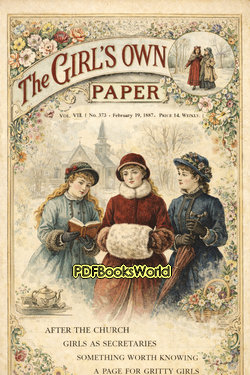
The Girl's Own Paper, Vol. VIII, No. 373, February 19, 1887
by Various Authors
A Victorian Weekly Filled With Literature, Learning, and Inspiration
The Girl's Own Paper, Vol. VIII, No. 373, February 19, 1887 continues the tradition of one of the most popular magazines produced for young women in Victorian Britain. Combining serialized fiction, educational articles, historical narratives, practical advice, and illustrations, the publication sought to inform and entertain its readers while promoting intellectual curiosity and personal development. This issue reflects the values, interests, and cultural expectations of the late nineteenth century while providing a fascinating glimpse into everyday reading habits of the era.
A Magazine Designed for Young Women
The Girl's Own Paper was created to offer readers a broad range of material that balanced enjoyment with education. Each issue typically contained stories, essays, household guidance, historical features, and correspondence columns. The publication encouraged self-improvement while remaining accessible and engaging to a wide audience.
Its popularity stemmed from its ability to combine practical usefulness with entertaining content.
Typical Features of This Issue
- Serialized Stories: Continuing narratives that encouraged readers to follow weekly installments.
- Historical Articles: Accounts of notable people, places, and events.
- Educational Features: Articles introducing readers to science, literature, and culture.
- Domestic Advice: Guidance on household management and daily life.
- Illustrated Content: Drawings and visual elements accompanying articles and stories.
Continuing Literary Adventures
Like many issues of the magazine, this number carried forward serialized fiction that encouraged readers to return each week. Such stories often combined adventure, family relationships, moral lessons, and historical settings. Their episodic nature created anticipation while helping establish a loyal readership.
These narratives formed one of the publication's most popular attractions.
Education Beyond the Classroom
The magazine sought to broaden readers' horizons by presenting subjects that extended beyond formal schooling. Articles introduced historical events, scientific discoveries, artistic achievements, and cultural topics in an approachable manner. The goal was to foster lifelong learning and intellectual engagement.
This educational emphasis distinguished the publication from many purely recreational magazines.
A Reflection of Victorian Values
The issue reflects many of the ideals associated with Victorian society, including diligence, courtesy, self-discipline, and moral responsibility. At the same time, it reveals growing interest in women's education and expanding opportunities for personal development.
Modern readers can gain valuable insight into the aspirations and expectations that shaped the lives of young women during the period.
The Importance of Periodical Literature
Weekly magazines played a significant role in nineteenth-century culture. They provided affordable access to literature, information, and current discussions while connecting readers to a broader intellectual community. For many households, publications such as The Girl's Own Paper were important sources of both entertainment and knowledge.
The magazine's influence extended far beyond its individual articles and stories.
Why This Issue Remains Valuable Today
Historians, literary scholars, and general readers continue to find value in Victorian magazines because they preserve details about everyday life, popular interests, and social attitudes. This issue offers a snapshot of the concerns, ambitions, and reading preferences of its original audience.
Its pages provide a rich record of cultural history as well as enjoyable reading material.
A Lasting Example of Victorian Publishing
The Girl's Own Paper, Vol. VIII, No. 373, February 19, 1887 demonstrates why the magazine became one of the defining periodicals of its era. Through fiction, education, practical guidance, and cultural commentary, it sought to inform and inspire its readers. Today, the issue remains an engaging historical resource that illuminates the literary and social world of Victorian Britain.