
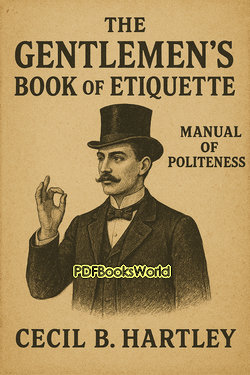
The Gentlemen's Book of Etiquette and Manual of Politeness
by Cecil B. Hartley
Why The Gentlemen’s Book of Etiquette Still Fascinates Modern Readers
The Gentlemen’s Book of Etiquette and Manual of Politeness by Cecil B. Hartley offers a fascinating look into the social rules and expectations of nineteenth-century society. Originally published in the 1800s, the book was written as a guide for proper behavior in public and private life. Although modern society has changed greatly since then, many readers still find the book interesting because it reflects how manners, respect, and social image shaped everyday relationships during the Victorian era.
The book covers nearly every aspect of polite behavior, including conversation, dining, dress, letter writing, and public conduct. Hartley believed that manners were not simply formal rules but an important reflection of character and self-discipline. His advice often focused on showing consideration and respect toward others while maintaining dignity and composure in social situations.
A Window Into Victorian Society
One reason the book remains valuable today is its detailed picture of nineteenth-century social life. Readers can see how strongly etiquette influenced relationships, reputation, and class status during that period. Simple activities such as visiting friends, attending dinners, or greeting strangers followed carefully structured social expectations.
Hartley’s writing reveals a world where behavior and appearance carried enormous importance. A gentleman was expected to speak politely, dress carefully, avoid public conflict, and show courtesy in every social interaction. These rules reflected the belief that self-control and good manners were signs of moral character.
Readers interested in Victorian history and etiquette traditions can explore additional historical background through Encyclopaedia Britannica.
Advice That Still Feels Relevant
Although some parts of the book now feel outdated, certain ideas continue to resonate with modern readers. Hartley repeatedly emphasizes kindness, respect, patience, and thoughtful communication. These qualities remain valuable in both personal and professional relationships today.
The book also highlights the importance of listening carefully, avoiding unnecessary arguments, and making others feel comfortable in conversation. Even in the digital age, many readers recognize these principles as timeless social skills.
The Role of Manners in Personal Success
Hartley believed that good manners could improve both social and professional opportunities. A polite and disciplined person was more likely to gain trust, respect, and acceptance within society. This connection between behavior and reputation appears throughout the entire book.
The author also warns against arrogance, rude speech, and selfish behavior. He presents etiquette not as empty performance but as a way to create harmony and mutual respect between individuals.
Why the Book Still Attracts Readers
Modern readers often enjoy the book because it feels both historical and surprisingly relatable. Some advice appears overly formal by today’s standards, yet other sections sound remarkably familiar. Concerns about first impressions, respectful conversation, and social confidence still exist in modern life.
The book also attracts readers interested in historical lifestyle, vintage culture, and traditional manners. Its detailed descriptions of social behavior create a vivid portrait of everyday life during the nineteenth century.
A Lasting Cultural Document
More than a guide to manners, The Gentlemen’s Book of Etiquette serves as an important cultural document that captures the values and social expectations of its time. It reveals how people once viewed respectability, personal conduct, and social success in a rapidly changing society. Even today, the book continues to offer readers an intriguing combination of history, social commentary, and timeless reflections on human behavior.
Similar Genres
About the Author
Cecil B. Hartley was an American author, editor, and compiler best known for his practical manuals on etiquette, outdoor skills, self-improvement, and everyday conduct. Writing during the mid-nineteenth century, Hartley produced a wide range of instructional books that reflected the values of personal discipline, courtesy, self-reliance, and moral character. Explore Cecil B. Hartley books to discover the author's life, literary career, and access notable works.