
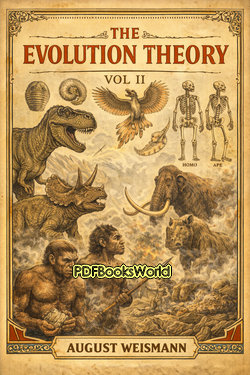
The Evolution Theory, Vol. 2 of 2
by August Weismann
A Major Scientific Work on Evolution and Biological Development
The Evolution Theory, Vol. 2 by August Weismann is an important scientific study exploring the principles of evolution, heredity, adaptation, and biological development. As one of the influential evolutionary thinkers of the late nineteenth and early twentieth centuries, Weismann helped shape scientific debate about how traits are inherited and how species change over time.
This volume continues Weismann’s detailed examination of evolutionary processes and his arguments concerning natural selection, variation, and the role of heredity in biological life. The work reflects a period of intense scientific discussion following the influence of Charles Darwin’s evolutionary theories.
Weismann’s ideas became highly significant in the development of modern evolutionary biology and genetics.
Exploring Evolution and Heredity
The book examines how species evolve through inherited variation and natural selection rather than through the inheritance of acquired characteristics. Weismann strongly opposed the idea that traits developed during an organism’s lifetime could be directly passed to offspring.
One of his most influential ideas involved the distinction between reproductive cells and the rest of the body, a concept often associated with his “germ-plasm theory.” According to Weismann, hereditary information was carried through reproductive cells and remained separate from bodily changes caused by environment or experience.
The work discusses adaptation, survival, biological variation, and the long-term development of living organisms across generations.
The Scientific Style of August Weismann
August Weismann writes in a careful and analytical style focused strongly on scientific reasoning and biological evidence. His arguments combine observation, theoretical discussion, and engagement with competing scientific ideas.
The language reflects the serious and systematic nature of scientific writing during the period, while still aiming to explain complex evolutionary concepts clearly for educated readers.
Weismann’s work demonstrates strong commitment to logical analysis and the scientific method.
Main Topics Explored in the Volume
- Evolution and natural selection
- Heredity and biological inheritance
- Adaptation and species development
- Scientific debate about evolutionary theory
Why the Book Still Holds Scientific Importance
The Evolution Theory remains historically important because August Weismann’s ideas influenced the development of modern evolutionary biology and genetics. Readers interested in the history of science often study his work to understand how scientific understanding of heredity evolved before the discovery of modern genetics.
The book also reflects the intellectual debates surrounding Darwinism and biological theory during a critical period in scientific history.
Although some details of nineteenth-century biology were later revised, Weismann’s emphasis on heredity and selection remained highly influential.
The Lasting Importance of Evolutionary Theory
Evolutionary theory transformed scientific understanding of life by explaining how species develop and change over long periods of time. Debates about heredity, adaptation, and natural selection shaped biology, medicine, anthropology, and many other fields.
Scientists like August Weismann helped refine and strengthen evolutionary theory by challenging ideas lacking experimental support and encouraging more rigorous biological research.
The continuing importance of genetics and evolutionary biology helps preserve the historical significance of works like this.
Final Thoughts
The Evolution Theory, Vol. 2 by August Weismann is a major scientific work exploring evolution, heredity, and biological development through careful reasoning and theoretical analysis. Through detailed discussion of natural selection and inheritance, Weismann contributed significantly to the foundations of modern evolutionary science.
For readers interested in biology, genetics, evolutionary theory, and the history of science, this volume remains both educational and historically important.
Similar Genres
About the Author
August Weismann was a German evolutionary biologist, zoologist, and one of the most influential scientific thinkers of the late nineteenth century. His pioneering research transformed the understanding of heredity and evolution, helping bridge the gap between Charles Darwin's theory of natural selection and the later development of modern genetics. Explore August Weismann books to discover the author's life, literary career, and access notable works.