
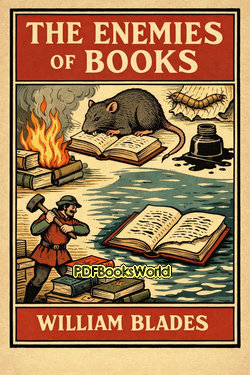
The Enemies of Books
by William Blades
The Surprising Ways Books Have Been Damaged, Destroyed, and Neglected Through History
Books may appear durable sitting quietly on shelves, yet throughout history they have faced constant danger from fire, water, insects, careless owners, poor storage, war, and even enthusiastic readers. In The Enemies of Books, William Blades examines the many threats that have endangered manuscripts and printed works across centuries while also celebrating the importance of preserving literary and historical knowledge.
Part historical study and part passionate warning, the book remains one of the classic works about book preservation and library care.
The Many Dangers Lurking Around Libraries
Blades organizes the book around the different “enemies” responsible for damaging books over time. Some dangers are dramatic, while others are surprisingly ordinary.
Among the threats discussed are:
- Fire destroying entire libraries and archives
- Water and dampness causing decay and mold
- Insects and rodents eating paper and bindings
- Dust, sunlight, and neglect slowly damaging collections
Even excessive handling by readers becomes a potential danger when books are not treated carefully.
Human Carelessness as an Enemy
One of the book’s most entertaining and revealing themes is the idea that people themselves often become the greatest threat to books.
Blades describes careless owners who write in margins, fold pages, damage bindings, or store valuable works improperly.
Collectors, librarians, and scholars are encouraged to treat books not merely as objects of convenience, but as cultural treasures deserving protection.
The work reflects deep respect for printed knowledge and literary heritage.
Libraries Lost Through History
The book also explores famous historical disasters involving the destruction of books and manuscripts.
Wars, political conflict, accidental fires, and religious persecution have erased enormous amounts of written history over the centuries.
Blades reminds readers that many ancient works survive only because earlier generations preserved fragile manuscripts through difficult circumstances.
This historical perspective gives the book emotional weight beyond practical preservation advice.
A Love Letter to Printed Books
Beneath its warnings and historical anecdotes, the book clearly expresses affection for books as physical objects.
Blades admires:
- The craftsmanship of bindings and printing
- The cultural importance of libraries
- The transmission of knowledge across generations
- The beauty and permanence of written literature
The work celebrates the idea that books connect human beings across time and history.
The Writing Style of William Blades
Blades writes with enthusiasm, humor, and strong personal conviction. Although the subject involves preservation and bibliography, the tone remains lively rather than overly technical.
Historical anecdotes and sharp observations make the material entertaining while still educational.
The author’s passion for books is visible throughout every chapter.
Why The Enemies of Books Still Matters Today
The Enemies of Books continues to resonate because preserving knowledge remains an important cultural responsibility even in the digital age. Physical books still face damage, neglect, and disappearance despite modern technology.
For readers interested in libraries, book collecting, literary history, preservation, and the culture of reading, William Blades’s work remains both informative and deeply affectionate toward the written word.
Similar Genres
About the Author
William Blades was an English printer, bibliographer, historian, and author whose lifelong passion for books made him one of the leading authorities on the history of printing and book preservation. He devoted much of his career to studying the craft of printing, the work of early printers, and the importance of protecting books for future generations. Explore William Blades books to discover the author's life, literary career, and access notable works.