The Dead-Star Rover
by Robert Abernathy
Space Exploration, Cosmic Mystery, and Survival Among the Ruins of a Dead Civilization
The Dead-Star Rover by Robert Abernathy is a classic science fiction adventure blending interstellar exploration, alien mystery, survival, and the haunting remnants of an extinct civilization. Written during the golden age of pulp science fiction, the story reflects mid-twentieth-century fascination with deep space travel, ancient cosmic secrets, and humanity’s uncertain place within a vast and often dangerous universe.
Abernathy presents outer space not merely as a frontier of scientific discovery, but as a realm filled with forgotten histories, strange technologies, and eerie evidence of civilizations that once flourished and vanished long before humanity entered the stars.
A Journey into Dangerous Cosmic Ruins
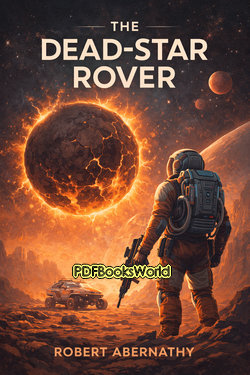
The story follows explorers traveling aboard the Dead-Star Rover, a vessel carrying its crew into remote and mysterious regions of space associated with abandoned worlds and long-dead stellar systems. As the mission progresses, the explorers encounter evidence of vanished alien societies whose technology and fate raise troubling questions about the destiny of intelligent life.
The hostile conditions of deep space create constant danger through isolation, uncertainty, and the possibility of contact with forces beyond ordinary human understanding.
Rather than portraying space travel as triumphant conquest alone, the work emphasizes vulnerability, fear, and the psychological strain created by confronting immense cosmic emptiness and forgotten civilizations.
The volume reflects the era’s fascination with archaeology projected into outer space, combining scientific adventure with mystery and speculative philosophy.
Its tone combines suspense, wonder, and atmospheric cosmic unease.
The Fragility of Civilization
A major theme throughout the story is the idea that even advanced civilizations may disappear, leaving behind only ruins, artifacts, and unanswered mysteries.
Abernathy repeatedly explores humanity’s fear that technological achievement cannot guarantee permanence or survival against the immense forces of time and the universe.
The work also reflects broader science fiction concerns regarding mortality, cosmic insignificance, and the uncertain future awaiting intelligent species.
This philosophical tension gives the narrative depth beyond simple space adventure.
Science Fiction Themes Explored Throughout the Story
- Interstellar Exploration and Discovery: Space travelers venture into remote and mysterious regions of the cosmos.
- Ancient Alien Civilizations: Ruins and abandoned technologies reveal forgotten extraterrestrial societies.
- Isolation and Survival in Space: The dangers of deep space test human endurance and psychological stability.
- The Mystery of Cosmic History: The universe appears ancient, vast, and filled with lost knowledge.
- The Impermanence of Civilization: Even great cultures may eventually vanish into obscurity.
The story reflects many classic elements associated with thoughtful pulp-era space fiction.
The Universe Beyond Human Understanding
One of the work’s strongest ideas is that humanity occupies only a small and temporary place within an unimaginably old universe filled with forgotten histories and unknown dangers.
Abernathy repeatedly demonstrates how encounters with alien ruins force characters to confront the possibility that all civilizations, including humanity’s, may one day fade into silence.
The story also reveals enduring science fiction fascination with cosmic archaeology and the search for meaning among the remnants of extinct worlds.
This combination of mystery, adventure, and existential reflection gives the narrative lasting imaginative appeal.
Robert Abernathy’s Atmospheric Science Fiction Style
The Dead-Star Rover demonstrates Robert Abernathy’s ability to combine suspenseful exploration, cosmic atmosphere, and speculative imagination into engaging interplanetary adventure fiction.
The writing remains vivid, fast-moving, and strongly focused upon maintaining mystery and tension within strange extraterrestrial environments.
Abernathy consistently presents the universe as both awe-inspiring and deeply unsettling.
Why the Story Still Holds Science Fiction Interest
Modern readers continue finding The Dead-Star Rover fascinating because it captures the adventurous imagination and cosmic mystery associated with classic mid-century science fiction.
The story also provides insight into the period’s fascination with space travel, alien ruins, and the philosophical implications of humanity exploring a universe potentially filled with extinct civilizations.
Its themes of discovery, survival, cosmic isolation, and forgotten history continue appealing to readers who enjoy atmospheric speculative fiction and interstellar adventure.
For readers interested in classic science fiction, alien archaeology, space exploration, cosmic mystery, pulp adventures, and speculative space history, this work remains imaginative, suspenseful, and hauntingly memorable.
Similar Genres
About the Author
Robert Abernathy was an American science fiction author whose imaginative stories became popular fixtures of the Golden Age of pulp magazines during the mid-twentieth century. Writing primarily during the 1940s and 1950s, Abernathy crafted fast-paced adventures that explored space travel, alien civilizations, advanced technology, and humanity's future among the stars. Explore Robert Abernathy books to discover the author's life, literary career, and access notable works, including Hostage of Tomorrow , and more.