
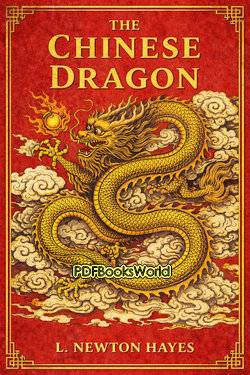
The Chinese Dragon
by L. Newton Hayes
An Early Twentieth-Century Exploration of China and Its Traditions
The Chinese Dragon by L. Newton Hayes is a historical and cultural study that seeks to introduce Western readers to the civilization, customs, beliefs, and social life of China. Written during a period of significant change in Chinese history, the book examines various aspects of Chinese society and attempts to explain the traditions and institutions that shaped one of the world's oldest continuous civilizations.
The dragon of the title serves as a powerful symbol of China itself. For centuries, the dragon represented authority, strength, wisdom, and imperial power, making it a fitting emblem for a work devoted to understanding the nation and its people.
The Symbolism of the Dragon
In Chinese culture, the dragon has long been regarded as a symbol of good fortune, power, and harmony. Unlike many Western depictions of dragons as destructive creatures, the Chinese dragon is traditionally associated with prosperity, protection, and natural forces.
Hayes uses this symbol to represent the enduring character of Chinese civilization and its rich cultural heritage.
A Portrait of Chinese Society
The book explores a variety of subjects, including family life, education, religion, government, social customs, and daily routines. Hayes attempts to provide readers with a broad understanding of how Chinese society functioned and how its traditions influenced individual and community life.
His observations reflect the interests and perspectives of the period in which the book was written, offering insight into both China and early Western interpretations of Chinese culture.
Highlights of the Book
- Cultural Study: Examination of Chinese traditions and customs.
- Historical Insight: Discussion of China's long civilization.
- Social Observation: Descriptions of everyday life and institutions.
- Symbolic Themes: Exploration of the dragon as a cultural emblem.
- Cross-Cultural Perspective: An attempt to explain one society to another.
Tradition and Continuity
A recurring theme throughout the work is the importance of tradition. Hayes describes a society deeply influenced by long-established customs, philosophical teachings, and family obligations. These traditions contributed to a sense of continuity that linked generations across centuries.
The book highlights how cultural values helped shape social stability and collective identity.
Major Themes
- Culture: The customs and beliefs that define a civilization.
- History: The influence of the past on the present.
- Tradition: The preservation of long-standing practices.
- Identity: Understanding national and cultural character.
- Learning: Exploring and appreciating different societies.
L. Newton Hayes's Perspective
L. Newton Hayes wrote at a time when many Western readers were eager to learn about countries that were undergoing political and social transformation. His work sought to make Chinese society more understandable to foreign audiences by explaining its institutions, customs, and cultural symbols.
Today, the book is valuable not only for its descriptions of China but also as a historical example of how cultures were interpreted and presented during the early twentieth century.
Why the Book Remains Interesting
The Chinese Dragon continues to attract readers interested in Chinese history and cultural studies. While modern scholarship provides updated perspectives and research, Hayes's work remains a useful historical document that reflects contemporary efforts to understand and explain China to the wider world.
For readers interested in Asian history, cultural traditions, and cross-cultural studies, the book offers an informative look at a civilization whose influence extends across centuries. Its discussions of symbolism, society, and tradition ensure its enduring historical interest.
Similar Genres
About the Author
L. Newton Hayes was an American writer, journalist, and lecturer who devoted much of his career to helping Western readers better understand China and its rich cultural heritage. Having spent many years living and traveling in China, he gained firsthand knowledge of its history, traditions, beliefs, and everyday life. Explore L. Newton Hayes books to discover the author's life, literary career, and access notable works.