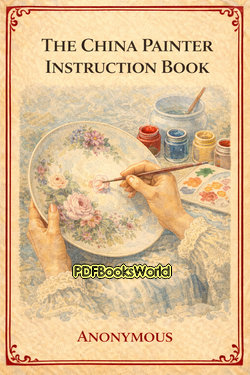
The China Painter Instruction Book
by Anonymous
The Decorative Art of Painting Fine China and Porcelain
Delicate floral patterns, carefully brushed gold trim, hand-painted porcelain plates, and richly decorated ceramic surfaces all belong to the refined artistic tradition explored in The China Painter Instruction Book by Anonymous. Created as a practical guide for artists and hobbyists, the book introduces readers to the techniques, materials, and decorative methods involved in the art of china painting during a period when handcrafted decorative arts enjoyed enormous popularity.
The work reflects both artistic craftsmanship and the growing interest in home-based creative hobbies during the late nineteenth and early twentieth centuries.
The Art of Decorating Porcelain
China painting involves applying painted designs to porcelain or ceramic surfaces, often followed by firing processes that permanently bond colors to the object.
The craft combines precision, patience, and artistic design.
The book discusses subjects such as:
- Brush techniques and paint application
- Color mixing and decorative composition
- Floral and ornamental patterns
- Methods for firing and finishing porcelain
These skills allowed artists to transform ordinary household objects into decorative works of art.
A Popular Artistic Hobby
During the era when the book appeared, china painting became especially fashionable among amateur artists and middle-class households interested in decorative crafts.
Studios, instructional manuals, and social art classes helped spread the practice widely.
The activity combined artistic creativity with domestic culture, making it both a pastime and a form of personal artistic expression.
Decorated porcelain objects often carried social and aesthetic value within the home.
Beauty Through Detail and Precision
Unlike large-scale painting, china decoration demands careful attention to fine detail. Artists work on curved and fragile surfaces where small mistakes can easily affect the final appearance.
The book emphasizes:
- Steady brush control
- Balanced ornamental design
- Careful layering of color
- Patience during preparation and finishing
The craft therefore requires both technical discipline and artistic sensitivity.
Floral Design and Decorative Tradition
Many china painting designs draw inspiration from flowers, leaves, birds, and elegant ornamental motifs. Such subjects were especially popular because they suited the delicate appearance of porcelain surfaces.
The decorative style often reflects broader artistic trends associated with Victorian and Edwardian domestic design.
Nature became a major source of inspiration for decorative arts during the period.
The Instructional Style of the Book
The China Painter Instruction Book is written as a practical manual intended to guide learners step by step through artistic processes.
The tone remains instructional and encouraging, focusing on technique, preparation, and craftsmanship.
Readers are introduced not only to artistic principles but also to the tools and materials necessary for successful work.
The book reflects a hands-on approach to creative learning.
Why The China Painter Instruction Book Still Interests Readers
The China Painter Instruction Book remains valuable because handcrafted decorative arts continue to attract people interested in creativity, traditional techniques, and historical craftsmanship.
For readers interested in ceramic art, porcelain decoration, historical craft instruction, Victorian decorative culture, and traditional painting methods, the book offers a fascinating glimpse into a refined artistic practice once closely connected with home artistry and elegant design.