
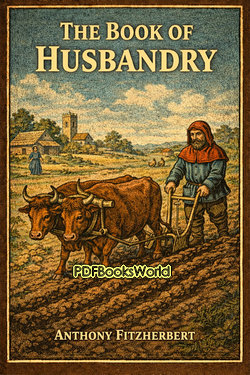
The Book of Husbandry
by Anthony Fitzherbert
Farming Advice From a World Without Modern Machines
Long before tractors, factory farming, and modern agricultural science, farmers depended on observation, seasonal knowledge, and practical experience to survive. The Book of Husbandry by Anthony Fitzherbert offers a fascinating look into that older rural world, presenting guidance on farming, land management, and everyday agricultural life in early England.
First published during the sixteenth century, the book became one of the earliest important works on English farming practices. Rather than focusing on theory alone, Fitzherbert writes with the practical mindset of someone familiar with the daily demands of rural labor.
The result is both a farming manual and a historical window into how people once worked the land centuries before modern technology transformed agriculture.
Daily Life Revolved Around the Seasons
In the world described by Fitzherbert, successful farming depended heavily on timing. Weather, planting cycles, animal care, and harvest schedules shaped nearly every aspect of rural life.
The book explains how farmers handled responsibilities such as:
- Preparing fields for planting
- Caring for livestock
- Managing crops and harvests
- Maintaining tools and property
- Organizing labor throughout the year
These tasks demanded constant attention because even small mistakes could threaten food supplies and financial survival.
Practical Instruction Rather Than Academic Theory
One reason the work remains interesting is its straightforward style. Fitzherbert focuses on useful advice rather than abstract discussion. His writing reflects the concerns of working farmers who needed reliable methods instead of complicated explanations.
Readers encounter guidance involving:
Animal Care
The book discusses horses, cattle, sheep, and other livestock essential to agricultural life.
Field Management
Attention is given to plowing, planting, and maintaining productive farmland.
Household Responsibility
Rural management included not only farming but also organizing labor, supplies, and daily domestic work.
Seasonal Planning
Success depended on understanding how work changed throughout the agricultural calendar.
The Book Reveals a Different Kind of Society
Modern readers may notice how deeply connected ordinary life once was to agriculture. Farming was not simply an occupation. It shaped economics, family structure, food production, and social order.
The text quietly reveals important details about the period:
- The physical difficulty of rural labor
- The importance of land ownership
- The dependence on natural conditions
- The value of practical knowledge passed through generations
- The close relationship between households and farming work
These details give the book historical importance beyond its agricultural advice.
Language and Style Reflect an Earlier England
Because the work was written centuries ago, some of its language and ideas feel very different from modern writing. Even so, the practical tone remains surprisingly clear. Fitzherbert writes directly, focusing on usefulness rather than decoration.
The simplicity of the advice helps modern readers understand how agricultural instruction worked before formal scientific farming became common.
Why Historians and Readers Still Find It Valuable
The Book of Husbandry continues to attract attention because it documents everyday rural life during an important period of English history. Historians value the work for its detailed descriptions of farming methods and social conditions.
The book also helps modern audiences appreciate how much effort and planning were required to maintain farms before industrial technology changed agriculture forever.
A Rare Glimpse Into Early Agricultural Life
The Book of Husbandry survives as more than an old farming guide. Anthony Fitzherbert created a practical record of how people worked, survived, and organized rural life in a very different world.
For readers interested in agricultural history, medieval studies, or the evolution of farming practices, the book provides a detailed and informative journey into the foundations of traditional rural society.
Similar Genres
About the Author
Anthony Fitzherbert was an English judge, legal scholar, and one of the earliest writers to document practical farming methods in the English language. Living during the Tudor period, he is remembered not only for his influential legal works but also for his pioneering contributions to agriculture. Explore Anthony Fitzherbert books to discover the author's life, literary career, and access notable works.