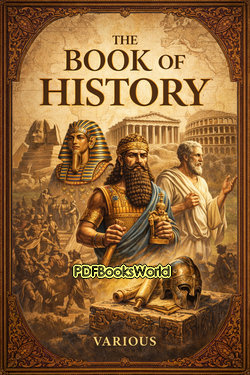
The Book of History (Vol. 1 of 18)
by Various Authors
An Ambitious Survey of Human Civilization from Earliest Times
The Book of History (Vol. 1 of 18) is the opening volume of a large historical series designed to present the story of humanity from prehistoric beginnings to more recent eras. Written and compiled by a group of scholars and historians, the series sought to make world history accessible to general readers by combining historical narratives with illustrations, maps, and explanations of major events and cultures.
The first volume lays the foundation for the entire collection by exploring the earliest stages of human development. It examines the origins of civilization, the emergence of organized societies, and the achievements of ancient peoples whose innovations shaped the course of history.
The Dawn of Human History
The volume begins by looking at humanity's earliest ancestors and the conditions under which ancient communities developed. Readers are introduced to prehistoric life, the use of tools, and the gradual transition from hunting and gathering to settled agricultural societies.
These developments marked significant turning points in human progress, creating the basis for later civilizations.
The Rise of Early Civilizations
As societies became more organized, people established cities, governments, and systems of trade. The book explores some of the world's earliest civilizations, including those that emerged in regions such as Mesopotamia, Egypt, and other centers of ancient culture.
Attention is given to the inventions, institutions, and beliefs that allowed these societies to flourish.
Highlights of the Volume
- Prehistoric Life: Exploration of humanity's earliest stages.
- Ancient Civilizations: Accounts of the first organized societies.
- Cultural Development: Growth of religion, art, and social institutions.
- Technological Progress: Early inventions and practical innovations.
- Historical Foundations: Events and developments that shaped later history.
Understanding Civilization
A major goal of the volume is to explain how civilization developed over time. The book examines the creation of laws, systems of government, written language, and organized religion. These innovations enabled larger communities to function and contributed to the growth of complex societies.
By tracing these developments, the volume helps readers understand the roots of the modern world.
Major Themes
- Human Progress: The advancement of societies over time.
- Innovation: The role of invention and discovery in history.
- Culture: The development of beliefs, traditions, and artistic expression.
- Community: The formation of organized societies.
- Continuity: The connections between ancient and modern civilizations.
A Popular History for General Readers
The series was created to provide an accessible overview of world history for a broad audience. Rather than focusing solely on political events, it seeks to explain how ordinary people lived and how civilizations developed. The inclusion of illustrations and narrative storytelling helped make historical subjects engaging and understandable.
This educational approach contributed to the popularity of the collection.
Why the Volume Remains Valuable
The Book of History (Vol. 1 of 18) remains an interesting introduction to the early stages of human civilization. Although modern research has refined and expanded historical knowledge, the volume continues to offer a broad overview of the achievements and challenges that shaped the ancient world.
For readers interested in world history, archaeology, ancient cultures, and the development of civilization, the book provides a fascinating starting point for exploring humanity's long and complex story. Its sweeping perspective and educational purpose ensure its enduring historical interest.