
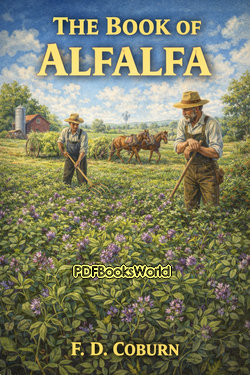
The Book of Alfalfa: History, Cultivation and Merits
by F. D. Coburn
The Remarkable Story of a Valuable Agricultural Crop
The Book of Alfalfa: History, Cultivation and Merits by F. D. Coburn is a comprehensive agricultural guide dedicated to one of the world's most important forage crops. Written by an experienced agricultural authority, the book examines alfalfa's history, methods of cultivation, practical uses, and economic value. At a time when scientific farming was becoming increasingly important, Coburn sought to provide farmers with reliable information about a crop capable of improving both productivity and profitability.
The work combines historical background with practical instruction, making it valuable to readers interested in agriculture, rural history, and sustainable farming practices.
The History of Alfalfa
Alfalfa has been cultivated for centuries and has earned a reputation as one of the most useful forage plants in agriculture. Originating in regions of Asia and the Middle East, it gradually spread across Europe and eventually to North America, where it became an important component of livestock farming.
Coburn traces this history, showing how the crop gained recognition for its adaptability, nutritional value, and ability to thrive under suitable conditions.
Why Alfalfa Became So Important
Farmers valued alfalfa because it provided highly nutritious feed for livestock while producing substantial yields. Its deep root system allowed it to access moisture below the surface, making it more resilient than many other crops during dry periods.
In addition, alfalfa contributed to soil improvement, helping maintain agricultural productivity over time.
Major Themes Found Throughout the Book
- Agriculture: Improving farming through effective crop selection.
- Cultivation: Practical methods for successful crop production.
- Soil Improvement: Enhancing land quality through proper farming practices.
- Economic Value: Increasing farm efficiency and profitability.
These themes highlight the book's practical focus and long-term agricultural significance.
Methods of Cultivation
A significant portion of the book is devoted to growing alfalfa successfully. Coburn discusses soil preparation, planting techniques, harvesting methods, and management practices designed to maximize yields. His advice reflects the agricultural knowledge of his era while emphasizing careful planning and observation.
For farmers seeking dependable forage crops, such information was especially valuable.
Benefits Beyond Livestock Feed
Although alfalfa is primarily known as a forage crop, its advantages extend beyond animal nutrition. Its ability to enrich soil and contribute to crop rotation systems made it an important component of sustainable farming. Farmers recognized that cultivating alfalfa could improve the productivity of their land as well as support livestock operations.
These broader benefits helped secure its place in modern agriculture.
A Window into Agricultural History
The book also provides insight into farming practices during a period of agricultural modernization. Readers can see how farmers and agricultural experts approached questions of crop selection, land management, and efficiency. As a historical document, it reveals the growing influence of scientific methods in agriculture.
This historical perspective adds value beyond the book's practical instruction.
Why Readers Continue to Appreciate the Book
- Practical Farming Advice: Detailed guidance on cultivating alfalfa.
- Agricultural History: Insight into early scientific farming methods.
- Economic Perspective: Understanding the value of forage crops.
- Educational Content: Clear explanations of cultivation and land management.
Why The Book of Alfalfa Remains Worth Reading
The Book of Alfalfa: History, Cultivation and Merits remains an important resource for understanding one of agriculture's most valuable crops. Through its blend of historical information, practical instruction, and agricultural insight, F. D. Coburn demonstrates why alfalfa became a cornerstone of successful farming. The book continues to interest readers who wish to learn about crop cultivation, rural history, and the development of modern agricultural practices.
Similar Genres
About the Author
F. D. Coburn was an American agricultural writer, educator, and public official whose work played an important role in advancing modern farming practices. As Secretary of the Kansas Department of Agriculture, he devoted much of his career to improving agricultural knowledge through practical research, public education, and detailed publications. Explore F. D. Coburn books to discover the author's life, literary career, and access notable works.