
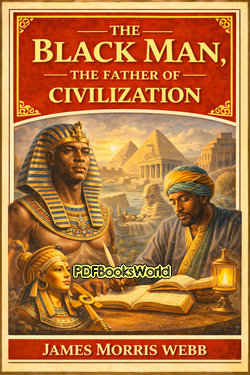
The Black Man, the Father of Civilization
by James Morris Webb
A Historical Work Exploring Ancient Civilizations and Cultural Origins
The Black Man, the Father of Civilization by James Morris Webb is a historical and cultural study that examines the role of African peoples and ancient Black civilizations in the development of human culture, knowledge, and early society. The book discusses history, race, civilization, religion, science, and cultural influence while arguing for the significant contributions of African civilizations to world history.
Written during a period when many historical narratives often ignored or minimized African achievements, the work attempts to highlight cultural connections and historical contributions that the author believed deserved greater recognition and study.
The Historical Context Behind the Book
During the nineteenth and early twentieth centuries, many historians and scholars debated the origins of civilization, human migration, and cultural development. At the same time, racial prejudice and colonial attitudes frequently influenced mainstream historical writing.
James Morris Webb wrote this book in response to those conditions, seeking to challenge ideas that dismissed the importance of African civilizations and Black historical influence. The work reflects the intellectual and social debates of its period while encouraging readers to reconsider accepted historical assumptions.
The book focuses especially on ancient societies, early human development, and the cultural achievements connected with Africa and neighboring civilizations.
Main Themes Explored Throughout the Book
The work discusses several broad themes related to history, race, and civilization.
- The origins and development of ancient civilizations
- The cultural and intellectual contributions of African peoples
- Historical interpretation and racial identity
- The relationship between culture, religion, and society
- Questions of historical recognition and representation
These themes make the book both historically interesting and socially significant.
Why Readers Continue to Study This Work
Readers interested in cultural history and historical interpretation continue to examine the book because it reflects an important effort to challenge racial stereotypes and broaden discussions about world civilization.
The book offers:
- A perspective on African influence in ancient history
- Insight into early twentieth-century historical debates
- Discussion of race, identity, and cultural contribution
- A thought-provoking historical and social commentary
Although some historical arguments in older works may be debated or reconsidered by modern scholarship, the book remains important as part of the history of intellectual and cultural discussion.
The Writing Style of James Morris Webb
James Morris Webb writes in a serious and argumentative style, presenting historical interpretation alongside social commentary and cultural analysis. His tone reflects both scholarly ambition and a desire to challenge dominant historical views of his era.
The work combines historical discussion with broader reflections on race, civilization, and human achievement. Readers often approach the book both as a historical document and as part of the larger conversation about representation in history.
Perfect for Readers Interested in Cultural History and Historical Debate
This book is especially suitable for readers interested in African history, intellectual history, cultural studies, and discussions about civilization and historical interpretation.
- Ideal for readers exploring historical perspectives on race and culture
- Suitable for students interested in intellectual and social history
- Encourages critical thinking about historical narratives
- Provides insight into early twentieth-century cultural debates
The work remains notable because of its effort to highlight overlooked historical contributions and challenge established assumptions.
A Thought-Provoking Historical Study on Civilization and Cultural Identity
Historical and cultural studies continue to remain important because they encourage readers to examine how societies understand the past and recognize the contributions of different peoples and civilizations.
The Black Man, the Father of Civilization by James Morris Webb remains a historically significant and thought-provoking work that explores questions of history, identity, civilization, and cultural influence from a distinctive early twentieth-century perspective.
Similar Genres
About the Author
James Morris Webb, born in 1828, was an American physician, lecturer, and author whose writings explored history, anthropology, and the origins of civilization from a perspective that challenged many of the prevailing assumptions of his time. Explore James Morris Webb books to discover the author's life, literary career, and access notable works.