
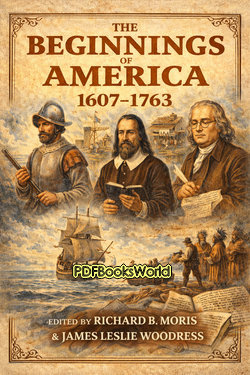
The Beginnings of America, 1607-1763
by Richard B. Morris
An Introduction to the Foundations of Early American History
The Beginnings of America, 1607-1763 by Richard B. Morris is a concise historical study that examines the development of the American colonies from the founding of Jamestown to the period just before the American Revolution. Morris, a respected historian of colonial America, presents an accessible overview of the people, events, and institutions that shaped the early history of what would eventually become the United States.
The book explores more than a century and a half of colonial growth, tracing how small settlements along the Atlantic coast evolved into thriving communities with distinct political, economic, and cultural identities. Through clear analysis and historical detail, Morris helps readers understand the foundations upon which the nation was later built.
The First Permanent English Settlement
The story begins in 1607 with the establishment of Jamestown in Virginia, the first permanent English settlement in North America. Early colonists faced numerous difficulties, including disease, food shortages, and unfamiliar conditions. Despite these hardships, the settlement survived and became an important starting point for future colonial expansion.
Morris explains how the experiences of these early settlers influenced later patterns of growth and development throughout the colonies.
The Growth of the Colonies
Over time, additional colonies were founded along the Atlantic coast. Each developed unique characteristics based on geography, economic activities, religious influences, and patterns of settlement. Some regions relied heavily on agriculture, while others became centers of trade and commerce.
The diversity of the colonies contributed to the richness of colonial society. At the same time, shared experiences gradually created connections among communities that would later prove significant.
Key Topics Covered
- Colonial Settlement: The establishment and expansion of English colonies.
- Economic Development: Agriculture, trade, and commercial growth.
- Political Institutions: The emergence of local government and self-rule.
- Cultural Influences: The role of religion, education, and community life.
- Imperial Relations: Connections between the colonies and Great Britain.
Life in Colonial America
The book provides insight into the daily lives of colonial Americans. Farmers, merchants, artisans, and political leaders all contributed to the growth of society. Communities established schools, churches, and local governments that helped shape social and cultural life.
Morris emphasizes that colonial America was not a single unified society but a collection of diverse communities with different experiences and priorities.
Major Themes
- Settlement: Building new communities in an unfamiliar land.
- Adaptation: Responding to environmental and social challenges.
- Self-Government: The development of local political institutions.
- Economic Opportunity: The pursuit of prosperity through trade and agriculture.
- Identity: The gradual emergence of a distinct colonial character.
The Road Toward Change
By 1763, the colonies had grown significantly in population, wealth, and political experience. The end point of Morris's study marks a turning point in American history. While the colonies remained part of the British Empire, tensions and new challenges were beginning to emerge.
The developments of the previous century and a half had created societies increasingly capable of managing their own affairs, setting the stage for the dramatic events that would follow in the years ahead.
Why the Book Remains Valuable
The Beginnings of America, 1607-1763 remains an excellent introduction to colonial history because it clearly explains the forces that shaped early America. Morris presents complex historical developments in a way that is both informative and accessible, making the book useful for students and general readers alike.
For anyone interested in American history, colonial society, or the origins of political and cultural institutions in the United States, this work provides a helpful foundation. Its examination of settlement, growth, and identity reveals how the earliest chapters of American history influenced the nation's future development.
Similar Genres
About the Author
Richard B. Morris was an American historian, educator, and scholar whose research on colonial America and the founding of the United States made him one of the foremost historians of early American history. Through meticulous scholarship and engaging writing, Morris explored the political, legal, and social developments that shaped the American colonies and the nation's emergence. Explore Richard B. Morris books to discover the author's life, literary career, and access notable works.