
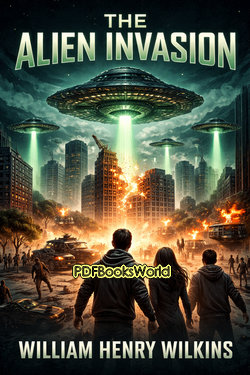
The Alien Invasion
by William Henry Wilkins
A Chilling Vision of Invasion, Fear, and National Survival
The Alien Invasion by W. H. Wilkins is a dramatic speculative novel that explores the fear of foreign invasion, political tension, and national insecurity during a period when military conflict and imperial rivalry deeply influenced public imagination. Combining suspense, action, and political speculation, the book reflects the anxieties of an era concerned about defense, warfare, and the vulnerability of nations.
The novel belongs to a popular tradition of invasion literature that became widespread during the late nineteenth and early twentieth centuries, when many writers imagined large-scale attacks threatening national stability and public safety.
A Story Built Around Fear and Uncertainty
The narrative presents a society suddenly confronted with the possibility of invasion by hostile outside forces. As danger grows, ordinary life begins to collapse under fear, confusion, and uncertainty.
Wilkins uses suspenseful situations and military tension to create an atmosphere of urgency. Citizens, leaders, and defenders must react quickly while facing questions about loyalty, preparedness, and survival.
The story reflects broader concerns of the time regarding military readiness and international rivalry.
Main Characters
- Military officers and defenders attempting to protect the nation during crisis
- Political leaders and officials dealing with uncertainty and strategic decisions
- Ordinary citizens affected by fear, disruption, and social instability
- Foreign invaders or hostile forces representing external threat and conflict
The characters help illustrate how war and invasion affect both governments and everyday people.
The Popularity of Invasion Fiction
During the period when the novel was written, invasion stories became highly popular across Europe and Britain. Rapid military modernization, international competition, and fears of future war inspired writers to imagine fictional attacks on national territory.
These novels often served both as entertainment and as warnings about defense and political weakness. Readers were fascinated by stories involving espionage, surprise attacks, military strategy, and national crisis.
The Alien Invasion reflects this literary trend while also capturing the atmosphere of political anxiety present during the era.
Main Themes Explored in the Novel
- Fear of invasion and national vulnerability
- Military preparedness and public security
- Patriotism, loyalty, and social unity during crisis
- The psychological effects of conflict and uncertainty
These themes helped make invasion fiction emotionally powerful for contemporary audiences.
The Writing Style of W. H. Wilkins
Wilkins writes in a direct and suspenseful style focused on maintaining tension and dramatic momentum. The narrative moves quickly through scenes of danger, military activity, and political concern.
The straightforward storytelling style keeps attention centered on action and uncertainty while also emphasizing the emotional atmosphere of fear and instability.
The novel’s pacing and dramatic structure helped make invasion fiction highly entertaining for readers of the period.
Why The Alien Invasion Remains Historically Interesting
The Alien Invasion remains valuable today because it reveals how literature reflected political fears and public anxieties before the major global conflicts of the twentieth century.
For readers interested in speculative fiction, military thrillers, political history, and early invasion literature, W. H. Wilkins’ novel offers both entertainment and insight into the cultural fears that shaped an important period of modern history.
Similar Genres
About the Author
William Henry Wilkins was an English author and historian whose writing covered a wide variety of subjects, including history, biography, travel, and fiction. He was known for presenting his ideas in a clear and engaging style that appealed to general readers. Explore William Henry Wilkins books to discover the author's life, literary career, and access notable works.