
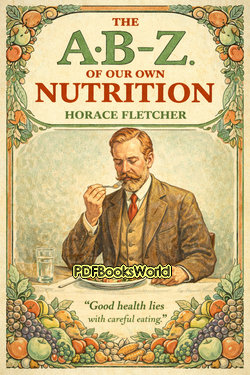
The A.B.-Z. of our own nutrition
by Horace Fletcher
Rethinking Everyday Eating Habits for Better Health
The A.B.-Z. of Our Own Nutrition by Horace Fletcher is a pioneering work on diet, digestion, and personal health. Written during a period when scientific interest in nutrition was rapidly growing, the book presents Fletcher's views on the relationship between eating habits and overall well-being. Best known for promoting careful chewing and mindful eating, Fletcher sought to encourage readers to think more deeply about how food is consumed, not merely what is consumed.
The book combines practical advice with observations about digestion, physical health, and daily habits. While some of its ideas reflect the scientific understanding of its era, it remains an interesting historical document that illustrates how early health reformers approached the subject of nutrition.
A Different Approach to Nutrition
Unlike many dietary guides that focus primarily on specific foods, Fletcher emphasizes the process of eating itself. He believed that proper digestion begins in the mouth and that individuals should pay closer attention to how they consume meals. According to his philosophy, eating slowly and thoughtfully could improve digestion and contribute to better health.
This approach encouraged readers to become more aware of their eating habits and to view meals as an important part of maintaining physical well-being. The emphasis on mindfulness distinguished his work from many other health discussions of the time.
The Importance of Digestion
Fletcher regarded digestion as one of the foundations of good health. He argued that the body functions most effectively when food is properly processed and utilized. By focusing on eating practices rather than simply dietary restrictions, he hoped to help readers improve their overall quality of life.
The book discusses how habits developed at the dining table can influence energy levels, comfort, and daily performance. Whether readers agreed with all of Fletcher's conclusions or not, his attention to digestion helped stimulate broader conversations about nutrition.
Key Ideas Presented in the Book
- Mindful Eating: Paying attention to the process of consuming food.
- Thorough Chewing: Encouraging careful preparation of food before swallowing.
- Digestive Health: Recognizing the importance of efficient digestion.
- Personal Responsibility: Taking an active role in maintaining well-being.
These concepts formed the basis of Fletcher's nutritional philosophy and contributed to his popularity among health-conscious readers.
The Historical Context of the Work
The late nineteenth and early twentieth centuries witnessed increasing public interest in health, exercise, and nutrition. During this period, many writers and reformers proposed new approaches to diet and wellness. Fletcher became one of the most recognizable figures in this movement due to his distinctive emphasis on eating habits.
His ideas attracted considerable attention and influenced discussions about digestion and dietary practices. Even though nutritional science has advanced significantly since then, the book provides valuable insight into the history of health education.
Lessons That Continue to Hold Value
- Eat Mindfully: Paying attention during meals can improve awareness of eating habits.
- Develop Healthy Routines: Consistent habits often contribute to long-term well-being.
- Understand Your Body: Personal observation can help individuals make informed choices.
- Moderation Matters: Balanced habits are often more sustainable than extreme approaches.
While modern nutrition relies on a broader scientific foundation, these general principles remain familiar to many contemporary health discussions.
Horace Fletcher's Influence on Nutrition Discussions
Horace Fletcher became widely known for advocating a more deliberate and thoughtful approach to eating. His work generated debate, attracted followers, and encouraged people to pay greater attention to digestion and dietary habits. Although some of his theories have been reassessed over time, his influence on popular health literature remains significant.
The book serves as an example of how individuals have long sought practical ways to improve health through everyday choices.
Why The A.B.-Z. of Our Own Nutrition Remains Interesting
The A.B.-Z. of Our Own Nutrition continues to interest readers as both a historical health guide and a reflection of early nutritional thinking. Through its emphasis on mindful eating, digestion, and personal responsibility, Horace Fletcher offers a perspective that contributed to broader conversations about wellness and self-care. For those interested in the history of nutrition and health reform, the book provides a fascinating glimpse into the ideas that shaped dietary discussions more than a century ago.
Similar Genres
About the Author
Horace Fletcher was an American health advocate, nutrition writer, and lecturer whose ideas on diet and mindful eating attracted widespread attention during the late nineteenth and early twentieth centuries. Best known for promoting careful chewing and moderation in eating, he encouraged people to improve their health through simple lifestyle changes rather than extreme dietary practices. Explore Horace Fletcher books to discover the author's life, literary career, and access notable works.