
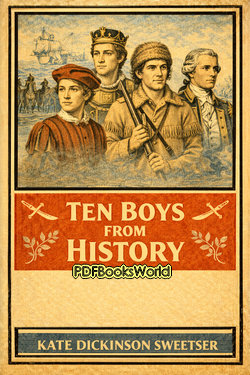
Ten Boys from History
by Kate Dickinson Sweetser
Young Lives That Grew Into History
Ten Boys from History by Kate Dickinson Sweetser introduces readers to the childhoods and early struggles of famous historical figures who later changed the world through leadership, creativity, courage, and achievement.
Instead of focusing only on their adult success, the book explores how these boys developed character, ambition, and determination during their younger years.
History Told Through Childhood Stories
One of the book’s most appealing qualities is its focus on ordinary beginnings. The future heroes, leaders, and thinkers are first shown as curious children learning through mistakes, hardship, discipline, and personal growth.
The stories emphasize that greatness often develops slowly through experience and perseverance rather than instant success.
Famous Historical Figures Included
- George Washington
Presented as disciplined, responsible, and shaped by strong personal values from an early age. - Benjamin Franklin
Shown as curious, inventive, hardworking, and eager to learn. - Abraham Lincoln
Remembered for honesty, self-education, and determination despite poverty. - Galileo and Other Thinkers
Several stories highlight intellectual curiosity and the desire to understand the world.
Main Themes Throughout the Book
- Perseverance and Hard Work
The boys often overcome obstacles through patience and determination. - Education and Curiosity
Learning becomes an important path toward achievement and personal growth. - Character and Integrity
Honesty, responsibility, and courage are treated as essential qualities. - Ambition and Self-Improvement
Many stories encourage readers to develop discipline and purpose.
A Warm and Inspirational Style
Kate Dickinson Sweetser writes in a simple and encouraging tone designed for younger readers.
The storytelling focuses on:
Memorable incidents, moral lessons, personal struggle, and moments that reveal future greatness in ordinary childhood experiences.
The language remains accessible while still presenting meaningful historical ideas.
Why the Book Became Popular With Young Readers
The biographies are short, engaging, and easy to follow, making history feel personal instead of distant.
Readers often enjoy:
Adventure-filled childhood stories, inspiring examples of perseverance, and the idea that ordinary children can grow into extraordinary individuals.
This personal approach helps make historical figures feel more relatable.
The Educational Purpose Behind the Stories
The collection was written not only to teach history but also to encourage moral development and ambition in young readers.
The stories promote values connected to:
Responsibility, education, discipline, honesty, courage, and lifelong learning.
Why These Stories Still Matter Today
Modern readers continue to connect with stories about overcoming limitation and pursuing knowledge or achievement.
The themes remain relevant because they focus on:
Personal growth, resilience, curiosity, leadership, and the importance of effort in shaping success.
Who May Enjoy This Book?
Ten Boys from History is especially suited for readers interested in:
Historical biographies, educational nonfiction, inspirational stories, children’s history books, and stories about perseverance and achievement.
Final Thoughts
Ten Boys from History by Kate Dickinson Sweetser transforms famous historical lives into accessible and inspiring stories for younger readers.
By focusing on childhood experiences and personal growth, the book reminds readers that determination, learning, and character often begin shaping greatness long before history remembers a name.
Similar Genres
About the Author
Kate Dickinson Sweetser was an American author and educator who specialized in writing engaging historical books for young readers. She believed that history became far more interesting when told through the lives of remarkable people rather than through dates and events alone. Explore Kate Dickinson Sweetser books to discover the author's life, literary career, and access notable works.