
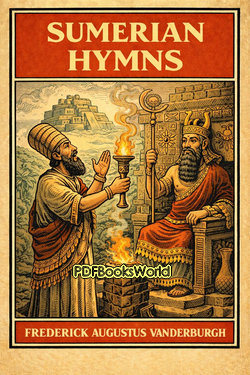
Sumerian Hymns
by Frederick Augustus Vanderburgh
Ancient Voices of Worship and Ritual From One of the World’s Earliest Civilizations
Long before classical Greece, the Roman Empire, or medieval kingdoms emerged, the ancient Sumerians recorded prayers, praises, and sacred poetry on clay tablets using cuneiform writing. Sumerian Hymns from Cuneiform Texts in the British Museum by Vanderburgh presents translations and studies of these remarkable religious compositions, opening a window into the spiritual and cultural world of one of humanity’s oldest known civilizations.
The collection preserves voices that once echoed through temples thousands of years ago in ancient Mesopotamia.
The Civilization Behind the Hymns
The Sumerians lived in southern Mesopotamia, in the region often called the “cradle of civilization.” They developed early cities, monumental temples, legal systems, and one of the first known writing systems.
Cuneiform script, pressed into clay tablets with reed styluses, allowed priests and scribes to preserve religious texts, administrative records, myths, and literature.
The hymns translated in the book formed part of ceremonial and spiritual life within Sumerian society.
What the Hymns Reveal
The hymns were not simply artistic poems. They functioned as acts of devotion, ritual praise, and communication with divine powers believed to govern nature, kingship, fertility, war, and cosmic order.
Readers encounter references to:
- Gods and goddesses associated with cities and natural forces
- Temple rituals and sacred ceremonies
- Royal authority connected with divine approval
- Requests for protection, prosperity, and stability
The texts reveal how deeply religion shaped everyday life in ancient Mesopotamia.
The Importance of Cuneiform Discovery
For centuries, these writings remained unreadable after knowledge of cuneiform disappeared. Modern archaeology and linguistic scholarship gradually unlocked the script during the nineteenth century.
The recovery and translation of tablets preserved in museums transformed understanding of early human civilization.
Works like this helped scholars reconstruct ancient religious beliefs, literature, and social organization from fragments buried for millennia.
The survival of the tablets themselves feels extraordinary.
Poetry and Sacred Language in Ancient Sumer
Many hymns contain highly formal and symbolic language filled with repetition, praise, and ceremonial imagery.
The poems often celebrate:
- The power and majesty of deities
- The sacred role of temples and rulers
- The order of the cosmos
- The relationship between humanity and divine forces
Even in translation, the texts preserve echoes of ritual performance and spiritual reverence.
The Scholarly Approach of Vanderburgh
Vanderburgh approaches the material with philological and historical care, focusing on translation and interpretation of the ancient tablets.
The work reflects early scholarly efforts to make Sumerian literature accessible to modern readers and researchers.
Although academic in purpose, the subject itself carries enormous historical and cultural fascination.
Why Sumerian Hymns Still Matter Today
Sumerian Hymns from Cuneiform Texts in the British Museum remains important because it preserves some of the earliest surviving expressions of organized religious thought and literary art in human history.
For readers interested in ancient civilizations, archaeology, comparative religion, Mesopotamian history, and early literature, the collection offers a rare opportunity to encounter the spiritual imagination of humanity’s distant past through texts written more than four thousand years ago.
Similar Genres
About the Author
Frederick Augustus Vanderburgh was an American scholar, translator, and author whose work focused on the languages, literature, and civilizations of the ancient Near East. He devoted his studies to making some of the world's earliest written texts accessible to modern readers through careful translation and historical explanation. Explore Frederick Augustus Vanderburgh books to discover the author's life, literary career, and access notable works.