
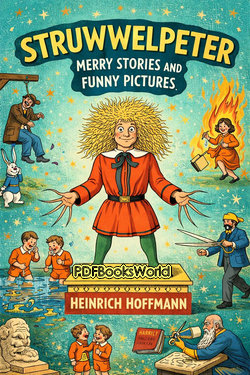
Struwwelpeter - Merry Stories and Funny Pictures
by Heinrich Hoffmann
A Famous Children's Classic Filled with Humor, Imagination, and Memorable Moral Tales
Struwwelpeter - Merry Stories and Funny Pictures by Heinrich Hoffmann is one of the most recognizable and unusual children's books of the nineteenth century. Combining humorous verse, exaggerated situations, imaginative illustrations, and cautionary tales, the collection became famous for its unforgettable characters and dramatic lessons about behavior, manners, and childhood discipline.
The book blends comedy with moral instruction, presenting stories where mischievous or careless children experience surprising and often exaggerated consequences for their actions. Its distinctive style and striking illustrations helped make it one of the most influential illustrated children's books in European literary history.
The Origins of Struwwelpeter
Heinrich Hoffmann originally created the stories as a gift for his young son when he could not find a children's book he considered entertaining and imaginative enough. Rather than writing traditional moral lessons in a serious tone, Hoffmann combined playful rhymes with dramatic illustrations and absurd situations.
The result was a collection unlike most children's books of the time. The stories quickly became popular because they were funny, visually memorable, and emotionally energetic.
Over time, the book became widely translated and influenced later children's literature and illustration styles around the world.
Main Characters and Memorable Stories
The collection includes several famous characters whose unusual behavior creates humorous and cautionary situations.
- Struwwelpeter, the untidy child with wild hair and long fingernails
- Little Suck-a-Thumb, whose bad habit leads to dramatic consequences
- Fidgety Philip, unable to sit still at the dinner table
- Harriet, who ignores warnings about playing with fire
- The Inky Boys, involving social behavior and punishment
- Johnny Head-in-Air, distracted by daydreaming and carelessness
Each story uses exaggeration and humor to create memorable lessons about attention, obedience, safety, and behavior.
Main Themes Found Throughout the Book
The stories explore several themes commonly connected with nineteenth-century children's literature.
- Childhood behavior and discipline
- The consequences of carelessness and disobedience
- Humor and exaggeration as teaching tools
- Imagination and visual storytelling
- The relationship between entertainment and moral lessons
Although modern readers sometimes view the stories differently from nineteenth-century audiences, the collection remains culturally and historically important.
Why Readers Continue to Remember Struwwelpeter
The book continues to remain famous because of its unusual blend of comedy, dark humor, visual creativity, and memorable storytelling. Many readers recognize the exaggerated characters and situations immediately.
The collection offers:
- Classic illustrated stories with strong visual identity
- Humorous and imaginative cautionary tales
- Historical insight into children's literature and education
- A unique combination of entertainment and moral instruction
The stories continue to inspire discussion about childhood, discipline, humor, and literary tradition.
The Writing and Illustration Style of Heinrich Hoffmann
Heinrich Hoffmann combines rhythmic verse with lively illustrations that help make the stories emotionally immediate and visually memorable. The exaggerated art style strengthens both the humor and the dramatic impact of the tales.
His storytelling uses repetition, rhythm, and visual exaggeration to capture the attention of young readers while creating scenes that remain unforgettable long after reading.
The balance between comedy and warning gives the collection its unique literary character.
A Timeless Children's Classic of Humor and Imagination
Classic children's literature continues to remain meaningful because it reflects changing ideas about education, morality, imagination, and storytelling across generations.
Struwwelpeter - Merry Stories and Funny Pictures by Heinrich Hoffmann remains one of the most distinctive children's books ever created, celebrated for its imaginative illustrations, humorous cautionary tales, and lasting influence on illustrated storytelling and children's literature.
Similar Genres
About the Author
Heinrich Hoffmann, born in 1809, was a German physician, psychiatrist, and children's author whose imaginative stories and illustrations made him one of the best-known writers of nineteenth-century children's literature. Although trained as a doctor, he developed a passion for writing entertaining books that combined lively pictures with memorable rhymes. Explore Heinrich Hoffmann books to discover the author's life, literary career, and access notable works.