
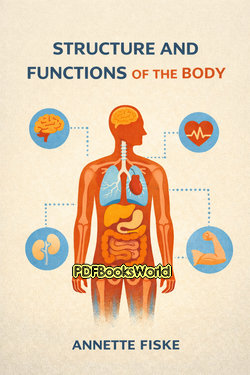
Structure and Functions of the Body
by Annette Fiske
The Human Body and the Science of Anatomy
Structure and Functions of the Body is an educational scientific work explaining the anatomy, organization, and operation of the human body. Written as an accessible introduction to biology and physiology, the book examines how organs, tissues, muscles, nerves, and bodily systems function together to sustain life and maintain health.
The work presents the human body as a highly organized and interconnected system in which every structure performs important functions necessary for survival and physical balance.
Understanding the Human Body
The book introduces readers to the major systems of the body including the skeletal, muscular, circulatory, respiratory, digestive, and nervous systems. Each section explains how specific organs and structures contribute to movement, breathing, nutrition, sensation, and overall bodily coordination.
Scientific explanations are presented in a clear and educational manner intended for students and general readers rather than medical specialists alone. Complex biological processes are simplified without losing their essential meaning.
The work emphasizes that the body operates through cooperation between many interconnected systems rather than isolated organs functioning independently.
The Importance of Physiology
A major theme throughout the book is the relationship between bodily structure and bodily function. The text repeatedly demonstrates how the design of organs and tissues supports their specific roles within the body.
The work also highlights the importance of health, hygiene, nutrition, and physical care. Readers are encouraged to understand the body scientifically in order to appreciate the value of proper health practices and disease prevention.
At the same time, the book reflects the growing importance of biology and medical education during the modern scientific era.
This educational focus gives the work lasting instructional value.
Scientific Themes Explored Throughout the Book
- Human Anatomy: The structure of organs, tissues, and bodily systems is carefully explained.
- Physiology and Function: The book examines how the body performs essential life processes.
- Health and Hygiene: Proper physical care is connected with bodily well-being.
- Interdependence of Bodily Systems: Different organs cooperate to maintain balance and survival.
- Scientific Education: Knowledge of biology is presented as valuable for everyday life.
Clear and Educational Scientific Writing
Structure and Functions of the Body demonstrates an accessible educational style focused upon clarity, organization, and practical understanding. The writing remains direct, informative, and strongly centered upon helping readers understand scientific concepts without unnecessary technical difficulty.
The book consistently presents science as a useful tool for understanding both health and human life itself.
Why the Book Still Holds Educational Interest
Modern readers continue finding Structure and Functions of the Body useful because its explanations of anatomy and physiology remain foundational to biological education. Although scientific knowledge has advanced, the work still reflects important approaches to teaching human biology and physical health.
Its themes of scientific learning, bodily organization, health awareness, and biological understanding continue appealing to readers interested in anatomy, physiology, medicine, and educational science literature.
Similar Genres
About the Author
Annette Fiske was an American educator and author whose writings focused on making the study of human anatomy and physiology clear, practical, and engaging for students. She believed that understanding the human body was an essential part of education, helping readers develop healthy habits while appreciating the remarkable design and function of the body's systems. Explore Annette Fiske books to discover the author's life, literary career, and access notable works.