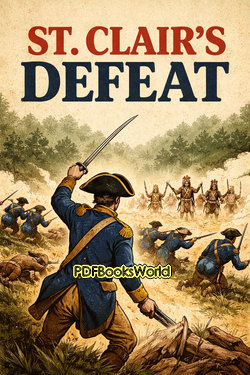
St. Clair's Defeat
by Anonymous
Frontier Warfare and Disaster in Early American History
St. Clair's Defeat by Anonymous is a historical account describing one of the most devastating military defeats suffered by the United States during the early frontier period. The work examines the 1791 campaign led by General Arthur St. Clair against Native American confederacies in the Northwest Territory, a conflict shaped by territorial expansion, frontier violence, and political uncertainty in the young American republic.
The narrative presents the frontier not as a peaceful landscape of settlement, but as a dangerous region marked by military struggle, cultural conflict, and competing claims to land and survival.
The Campaign and the Defeat
The account follows General St. Clair’s military expedition into the Northwest Territory, where American forces attempted to establish control over lands defended by Native American nations resisting settlement and expansion.
Poor preparation, inadequate supplies, harsh conditions, and strategic weaknesses left the army vulnerable. In November 1791, Native American warriors launched a powerful attack that overwhelmed St. Clair’s forces, causing catastrophic losses among soldiers and camp followers.
The defeat shocked the United States government and became one of the greatest military disasters in early American history.
Conflict on the Frontier
A major theme throughout the work is the instability and violence of frontier expansion during the early republic. The narrative repeatedly explores how territorial ambition created prolonged warfare between settlers, the United States government, and Native American confederacies defending their homelands.
The work also reflects the military difficulties faced by the young nation before the development of stronger national institutions and professional armed forces.
At the same time, the account illustrates the determination, military skill, and resistance of Native American leaders and warriors confronting expanding American settlement.
This combination of military history and frontier conflict gives the work lasting historical importance.
Historical Themes Explored Throughout the Work
- Frontier Warfare: Territorial expansion created violent military conflict in the Northwest Territory.
- Military Failure and Leadership: Weak preparation and organization contributed to disaster.
- Native American Resistance: Indigenous confederacies defended land and political independence.
- Early American Expansion: The young United States struggled to establish authority on the frontier.
- Historical Memory and National Development: The defeat influenced future military and political policy.
The Work’s Historical Narrative Style
St. Clair's Defeat uses a direct and informative narrative style focused upon military events, political consequences, and frontier conditions. The anonymous author emphasizes historical detail and the seriousness of the defeat within early American history.
The work consistently presents the frontier as a region shaped by danger, uncertainty, and competing national ambitions.
Why the Work Still Holds Historical Interest
Modern readers continue finding St. Clair's Defeat valuable because it documents a major event in the history of Native American resistance and early United States military development. The account also provides insight into frontier warfare, national expansion, and the political challenges facing the early republic.
Its themes of military conflict, territorial expansion, Native American history, frontier society, and political development continue appealing to readers interested in early American history, military studies, Indigenous history, and frontier narratives.