
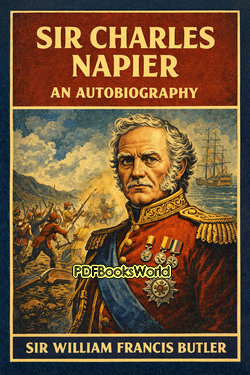
Sir Charles Napier - An Autobiography
by Sir William Francis Butler
Campaigns, Command, and the Restless Life of a Nineteenth-Century Soldier
Military camps, imperial politics, battlefield decisions, exhausting travel, and personal ambition shape the narrative of Sir Charles Napier: An Autobiography. The work presents the experiences and reflections of one of Britain’s most controversial and energetic military figures, offering readers a firsthand look at warfare, colonial expansion, leadership, and nineteenth-century military culture.
More than a record of battles alone, the autobiography reveals the personality, opinions, frustrations, and convictions of a man deeply involved in the political and military machinery of the British Empire.
A Soldier Formed by Constant Conflict
Charles Napier spent much of his life surrounded by military activity and imperial campaigns. His career carried him through dangerous assignments, difficult climates, political disputes, and rapidly changing international situations.
The autobiography traces how military discipline, battlefield experience, and personal determination shaped his worldview over time.
Readers encounter a figure who often appeared stubborn, outspoken, and fiercely independent in both military and political matters.
Scenes Found Throughout the Narrative
The autobiography moves across multiple locations and military experiences rather than remaining focused on a single campaign.
- Battlefield operations involving strategy and leadership
- Colonial administration connected with imperial expansion
- Military hardships including disease, exhaustion, and difficult terrain
- Political disagreements between officers and government authorities
These episodes create a portrait of military life beyond ceremonial heroism.
The Imperial World Behind the Memoir
The autobiography also reflects the broader reality of the British Empire during the nineteenth century. Military officers frequently acted not only as soldiers but also as administrators, negotiators, and political representatives.
Napier’s experiences reveal how warfare and imperial governance often became closely connected.
The narrative therefore provides insight into:
- Colonial military systems
- British expansion abroad
- The pressures of command
- The moral and political debates surrounding empire
Modern readers may view some attitudes within the book critically because they reflect the imperial assumptions of the era.
A Personality Larger Than the Battlefield
One of the autobiography’s most interesting qualities is Napier’s strong personal voice. He frequently expresses firm opinions about politics, leadership, military policy, and human character.
At times he appears proud and combative, while elsewhere he reveals frustration, self-doubt, or admiration for courage and loyalty.
This emotional directness gives the memoir much of its historical interest.
The Style and Tone of the Work
The writing combines military detail with personal reflection and anecdotal storytelling. Rather than reading like a dry historical report, the autobiography often feels immediate and conversational.
Descriptions of marches, campaigns, negotiations, and personal encounters help create a vivid sense of movement and uncertainty.
The tone frequently shifts between strategic seriousness and personal commentary.
Why Sir Charles Napier’s Autobiography Still Attracts Readers
Sir Charles Napier: An Autobiography remains valuable because firsthand military memoirs provide insight unavailable in official histories alone. Readers gain access not only to events but also to the mindset of those who participated in them.
For readers interested in military history, colonial studies, nineteenth-century politics, and autobiographical literature, the book offers an engaging and historically revealing account of a soldier navigating the turbulent world of empire and war.
Similar Genres
About the Author
Sir William Francis Butler was an Irish soldier, historian, travel writer, and biographer whose military career and literary talents earned him lasting recognition. After serving in several parts of the British Empire, he developed a deep interest in history, leadership, and the people he encountered during his travels. Explore Sir William Francis Butler books to discover the author's life, literary career, and access notable works.