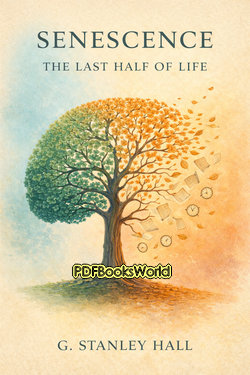
Senescence, the Last Half of Life
by G. Stanley Hall
A Landmark Study of Aging, Wisdom, and the Later Stages of Human Life
Senescence, the Last Half of Life by G. Stanley Hall is a pioneering work in psychology and gerontology that examines the physical, mental, emotional, and social aspects of aging. Published in the early twentieth century, the book was among the first major efforts to study later adulthood as a distinct and meaningful stage of life. Hall challenges the tendency to view old age solely as a period of decline, arguing instead that it offers unique opportunities for reflection, wisdom, and personal development.
A New Perspective on Aging
At a time when relatively little scholarly attention was devoted to the experiences of older adults, Hall sought to understand the aging process in a systematic way. He viewed senescence not merely as a biological condition but as a complex human experience involving changes in personality, social roles, and intellectual interests.
This broader perspective helped establish aging as an important subject of psychological study.
Major Topics Covered
- The Aging Process: Physical and psychological changes associated with later life.
- Wisdom and Experience: The value of knowledge accumulated over time.
- Mental Development: Intellectual and emotional growth in older adulthood.
- Social Roles: The changing position of older individuals within society.
- Longevity and Health: Factors influencing quality of life during aging.
G. Stanley Hall's Contribution to Psychology
G. Stanley Hall was one of the most influential American psychologists of his era. Known for his work on child development and educational psychology, he later turned his attention to the study of aging. His examination of later life reflected a belief that every stage of human development deserved careful scientific investigation.
His work helped broaden the scope of psychological research.
The Value of Experience
A recurring theme throughout the book is the importance of accumulated experience. Hall argues that older individuals possess forms of knowledge and judgment that cannot be acquired quickly. Their perspectives, shaped by decades of observation and participation in society, contribute valuable insights to communities and younger generations.
This emphasis on wisdom distinguishes the book from more pessimistic views of aging.
The Challenges of Later Life
While Hall acknowledges the difficulties associated with aging, including physical limitations and social changes, he also explores the ways individuals adapt to these challenges. The book examines how people find meaning, maintain relationships, and continue to contribute to society during the later stages of life.
Its balanced treatment combines realism with optimism.
A Foundation for Gerontology
Today, the work is recognized as an early contribution to the field of gerontology, the study of aging. Although modern research has expanded and refined many of Hall's ideas, his effort to treat aging as a subject worthy of serious inquiry was highly influential.
The book helped encourage future generations of scholars to explore the complexities of later adulthood.
A Historical Perspective on Human Development
Modern readers can appreciate the work both for its ideas and for the historical context it provides. It reveals how psychologists and social thinkers of the early twentieth century understood aging and highlights the evolution of attitudes toward older adults over time.
This historical dimension enhances its significance.
Why the Book Remains Relevant
As populations around the world continue to age, questions concerning health, purpose, community, and quality of life remain increasingly important. Many of the issues Hall discusses continue to influence contemporary research and public policy.
The book's emphasis on dignity, wisdom, and lifelong development remains especially meaningful.
A Pioneering Exploration of the Later Years
Senescence, the Last Half of Life stands as an important early study of aging and human development. Through discussions of wisdom, adaptation, health, and social responsibility, G. Stanley Hall presents a vision of later life that is both thoughtful and humane. The work remains a significant milestone in the history of psychology and an enduring reflection on one of the most universal aspects of human experience.
Similar Genres
About the Author
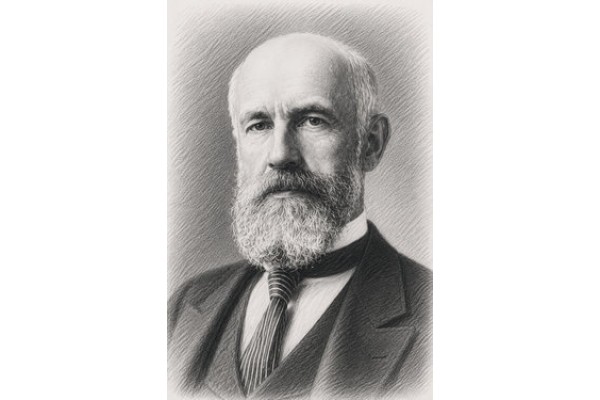
G. Stanley Hall was an American psychologist, educator, and author whose pioneering research helped establish psychology as a scientific discipline in the United States. Born in Ashfield, Massachusetts, in 1844, Hall became the first American to earn a doctorate in psychology and later founded the American Psychological Association. Explore G. Stanley Hall books to discover the author's life, literary career, and access notable works, including Youth - Its Education, Regimen, and Hygiene , and more.