
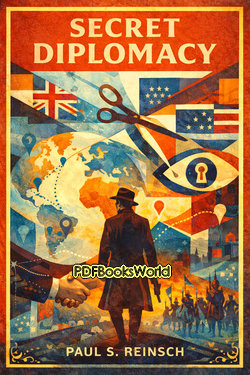
Secret Diplomacy
by Paul S. Reinsch
International Politics, Hidden Negotiations, and the Dangers of Secret Agreements
Secret Diplomacy by Paul S. Reinsch is a political and historical study examining the role of confidential negotiations, hidden treaties, and private international agreements in shaping global politics and contributing to international conflict. Written during the aftermath of the First World War, the book reflects widespread concern that secret diplomatic practices had intensified mistrust, rivalry, and instability among nations prior to the outbreak of war.
Reinsch presents diplomacy not merely as formal communication between governments, but as a powerful and often hidden force capable of influencing alliances, provoking crises, and shaping the fate of entire nations without public awareness.
The Problem of Hidden International Agreements
The book investigates how secret treaties and confidential diplomatic arrangements allowed governments to commit nations to political obligations and military alliances outside public scrutiny. Reinsch argues that secrecy in foreign policy often encouraged suspicion, misunderstanding, and dangerous international competition.
He explains how hidden agreements between European powers contributed to unstable alliance systems that helped create the conditions leading toward the First World War.
Rather than portraying diplomacy as entirely honorable or transparent, the work emphasizes how political ambition, national rivalry, and strategic calculation frequently operated behind closed doors.
The volume reflects early twentieth-century demands for greater openness and democratic accountability within international relations.
Its tone combines political analysis with historical reflection and reform-minded criticism.
Diplomacy and the Origins of War
A major theme throughout the book is the belief that secret diplomacy undermines trust between nations and weakens democratic oversight of foreign policy decisions.
Reinsch repeatedly argues that citizens often remained unaware of international commitments capable of dragging countries into military conflict.
The work also reflects broader postwar efforts to promote transparency, international cooperation, and new diplomatic institutions intended to prevent future global catastrophe.
This concern with openness became closely connected to movements supporting the League of Nations and international peace initiatives.
Political and Historical Themes Explored Throughout the Book
- Secret Treaties and Hidden Alliances: Reinsch examines confidential agreements shaping international politics.
- The Origins of International Conflict: Diplomatic secrecy is linked to mistrust and geopolitical instability.
- Democratic Accountability in Foreign Policy: The book argues that citizens should understand international commitments.
- Power Politics and National Rivalry: Governments pursue strategic advantage through covert negotiation.
- International Reform and Peace Efforts: Greater diplomatic transparency is presented as essential for stability.
The book became part of broader early twentieth-century debates concerning war, diplomacy, and international reform.
The Conflict Between State Secrecy and Public Responsibility
One of the work’s strongest ideas is that excessive secrecy in government weakens democratic society and increases the danger of international misunderstanding.
Reinsch repeatedly demonstrates how concealed agreements and private negotiations may entangle nations in obligations unknown to ordinary citizens.
The book also reveals growing public skepticism after the First World War regarding traditional European diplomacy and balance-of-power politics.
This political critique gives the work lasting historical significance.
Paul S. Reinsch’s Analytical Political Style
Secret Diplomacy demonstrates Paul S. Reinsch’s ability to combine historical interpretation, political theory, and international analysis into accessible and persuasive discussion.
The writing remains thoughtful, organized, and strongly focused upon explaining how diplomatic systems influence war, peace, and international stability.
Reinsch consistently presents political transparency as necessary for responsible international relations.
Why the Book Still Holds Historical and Political Importance
Modern readers continue finding Secret Diplomacy important because it addresses enduring questions concerning government secrecy, international alliances, public accountability, and the causes of war.
The book also provides insight into the political atmosphere following the First World War and the widespread effort to reform global diplomacy after unprecedented international destruction.
Its discussions of hidden negotiations, geopolitical rivalry, transparency, and democratic oversight continue resonating within modern debates about foreign policy and international relations.
For readers interested in political history, diplomacy, international relations, World War I studies, government transparency, peace movements, and geopolitical strategy, this work remains historically revealing, politically thoughtful, and intellectually significant.
Similar Genres
About the Author
Paul S. Reinsch was an American political scientist, diplomat, educator, and author whose work explored international relations, diplomacy, and global politics during a period of profound change in world affairs. As a respected scholar and later United States Minister to China, he combined academic knowledge with firsthand diplomatic experience. Explore Paul S. Reinsch books to discover the author's life, literary career, and access notable works.