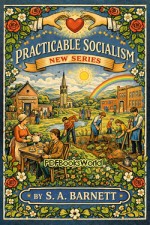
S. A. Barnett
Samuel Augustus Barnett, widely known as S. A. Barnett, was an English social reformer, Anglican clergyman, educator, and author whose work transformed ideas about poverty, education, and community service in Victorian Britain. Alongside his wife, Henrietta Barnett, he became one of the leading advocates of practical social reform, believing that lasting improvements in society could be achieved through education, cooperation, and active public service rather than charity alone. His writings encouraged thoughtful discussion about social responsibility and inspired generations of reformers, educators, and community leaders.
A Life Dedicated to Social Improvement
Barnett devoted his career to serving communities facing poverty and hardship. As a parish priest in London's East End, he witnessed firsthand the difficult living conditions experienced by working families during the Industrial Revolution. Rather than limiting his efforts to traditional charitable work, he sought long-term solutions that would improve education, housing, employment opportunities, and cultural life.
He believed that every individual, regardless of background, deserved access to knowledge, meaningful work, and opportunities for personal growth. His practical approach to reform emphasized cooperation between different sections of society, encouraging people from all walks of life to work together for the common good.
One of Barnett's most influential achievements was the founding of Toynbee Hall, a settlement house where university graduates lived and worked among local residents to provide education, legal advice, cultural activities, and social support. The settlement movement inspired similar organizations around the world and demonstrated how education and community engagement could become powerful tools for social progress.
Writing About Practical Reform
Barnett's books and essays reflected the same ideals that guided his public work. He believed that social problems should be approached with careful study, practical action, and compassion rather than political slogans or temporary relief measures. His writing combined moral conviction with thoughtful analysis, making complex social questions understandable to a wide audience.
Instead of presenting abstract theories, Barnett encouraged readers to consider realistic ways of improving everyday life through education, civic responsibility, and cooperation. His accessible style appealed to readers interested in public policy, religion, education, and philanthropy.
Ideas That Influenced Generations
Throughout his career, Barnett argued that education was essential not only for personal advancement but also for building stronger communities. He believed libraries, museums, public lectures, and universities should be accessible to everyone, helping individuals develop intellectually while strengthening society as a whole.
His work also emphasized the importance of bringing together people from different economic and social backgrounds. By encouraging dialogue and shared experience, he hoped to reduce misunderstanding and promote mutual respect. Many of these ideas influenced later developments in adult education, community development, and social welfare.
Among his publications is Practicable Socialism, New Series, a work that discusses practical approaches to social reform and examines how cooperation, education, and responsible citizenship can contribute to a fairer and more compassionate society. Like much of his writing, it reflects his belief that meaningful progress comes through constructive action rather than ideological conflict.
Notable Works
- Practicable Socialism, New Series – Essays exploring practical approaches to social reform and community improvement.
- Towards Social Reform – A collection of writings examining education, citizenship, and public responsibility.
- Religion and Social Reform – Discusses the relationship between Christian faith and social service.
- Papers on Settlement Work – Essays describing the goals and achievements of the settlement movement.
- Addresses and Social Essays – Speeches and articles promoting education, culture, and civic engagement.
An Enduring Legacy of Service
S. A. Barnett remains one of the most respected voices in the history of British social reform. His commitment to education, community service, and practical solutions helped reshape attitudes toward poverty and public responsibility. Many institutions and charitable organizations continue to reflect the principles he championed, demonstrating the lasting value of his vision of cooperation, compassion, and lifelong learning.
Readers visiting PDF Books World can explore the works of S. A. Barnett and discover thoughtful writings on social reform, education, and public service that continue to inspire readers interested in building stronger communities through knowledge, cooperation, and practical action.