
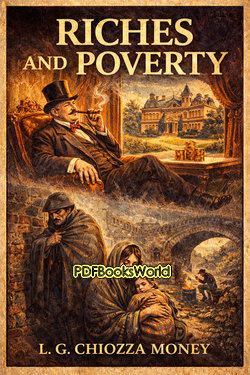
Riches and Poverty
by L. G. Chiozza Money
An Influential Study of Wealth, Inequality, and Economic Life
Riches and Poverty by L. G. Chiozza Money is a thoughtful and analytical examination of wealth distribution, economic inequality, and social conditions in modern society. The book studies how money, industry, labor, and class differences shape everyday life, while also questioning the fairness of economic systems.
Written during a period of major industrial and social change, the work became widely discussed for its detailed use of statistics and its criticism of unequal wealth distribution. Chiozza Money combines economic analysis with social commentary, creating a book that remains historically important and intellectually engaging.
A Closer Look at Economic Inequality
The book investigates the gap between wealthy and poor populations, examining how resources and opportunities are divided within society. Chiozza Money studies wages, living conditions, industrial profits, and patterns of ownership to demonstrate the economic differences between social classes.
Rather than presenting economics as a distant or purely mathematical subject, the author connects financial systems directly to human lives and social well-being. Discussions about poverty, labor conditions, and access to opportunity reveal the real-world consequences of economic imbalance.
The work also reflects growing public concern during the industrial era about fairness, social reform, and the responsibilities of governments and businesses.
The Analytical Writing Style of Chiozza Money
L. G. Chiozza Money writes in a clear and organized manner, balancing detailed economic information with accessible explanation. Statistical evidence and factual analysis are used throughout the book to support larger social arguments.
Despite its serious subject matter, the writing avoids unnecessary complexity. Readers are guided through discussions about income, production, taxation, and labor in a way that remains understandable for a general audience.
The author’s strong interest in social reform gives the work energy and purpose, making the book feel more connected to everyday human concerns than many purely technical economic studies.
Main Topics Discussed in the Book
- The unequal distribution of wealth and resources
- Poverty and working-class living conditions
- Industrial growth and economic power
- The relationship between economics and social reform
Why the Book Still Holds Relevance
Riches and Poverty continues to attract attention because debates about wealth inequality and social fairness remain important in modern society. Many of the concerns discussed by Chiozza Money, including income disparity and economic opportunity, continue to shape political and social discussions today.
Readers interested in economic history, social reform, and political thought often appreciate the book’s combination of factual analysis and moral concern. The work also offers valuable insight into the economic debates that influenced the early twentieth century.
Its focus on the human impact of economic systems gives the book lasting significance beyond historical interest alone.
Final Thoughts
Riches and Poverty by L. G. Chiozza Money is an important exploration of economic inequality and the social realities shaped by wealth distribution. Through careful analysis and thoughtful commentary, the book encourages readers to reflect on fairness, opportunity, and the structure of modern society.
For readers interested in economics, history, and social issues, this work remains both informative and thought-provoking.
Similar Genres
About the Author
L. G. Chiozza Money, born Leo George Chiozza Money, was a British economist, statistician, journalist, and Liberal politician whose writings played an important role in public debates about wealth, taxation, labor, and social reform during the early twentieth century. Explore L. G. Chiozza Money books to discover the author's life, literary career, and access notable works.