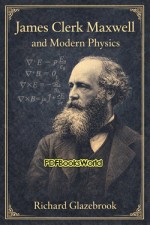
Richard Glazebrook
Richard Glazebrook was a British physicist, educator, and scientific administrator whose work played a significant role in the advancement of experimental physics during the late nineteenth and early twentieth centuries. As one of Britain's leading scientists, he contributed to the development of precise scientific measurement while also helping to organize and promote scientific research through major institutions. His writings made complex scientific ideas more understandable for students and general readers. In James Clerk Maxwell and Modern Physics, Glazebrook pays tribute to one of the greatest physicists in history while explaining the profound influence of Maxwell's discoveries on modern science.
A Distinguished Scientific Career
Richard Glazebrook studied mathematics and physics at the University of Cambridge before embarking on a career in scientific research and education. He became the first director of the National Physical Laboratory in the United Kingdom, where he promoted accurate measurement and experimental standards across many branches of science and engineering. His leadership helped strengthen the relationship between scientific research and practical industrial applications.
Explaining the Foundations of Modern Physics
Glazebrook believed that scientific knowledge should be shared clearly and accurately. His books introduced readers to important developments in physics without overwhelming them with unnecessary technical detail. He frequently wrote about the scientists whose discoveries transformed the understanding of electricity, magnetism, light, and matter, helping readers appreciate both the ideas and the people behind scientific progress.
James Clerk Maxwell and Modern Physics explores the achievements of James Clerk Maxwell, whose groundbreaking work on electromagnetism laid the foundation for many later advances in physics and technology. Glazebrook explains Maxwell's contributions within their historical context, demonstrating how they influenced generations of scientists.
A Clear and Educational Style
Richard Glazebrook wrote with precision, clarity, and a strong commitment to education. His ability to explain scientific principles in straightforward language made his books valuable to students, teachers, and readers interested in the history of science. Rather than focusing solely on mathematical theory, he emphasized the importance of observation, experimentation, and the practical applications of scientific discovery.
His publications continue to provide insight into the development of physics during one of the most important periods in scientific history.
Notable Works
- James Clerk Maxwell and Modern Physics – A study of Maxwell's life, discoveries, and lasting influence on modern science.
- Heat – An introduction to the principles of thermal physics and heat energy.
- Light – A clear explanation of the science of optics and the behavior of light.
- Physical Optics – A detailed study of optical phenomena and experimental methods.
- Dictionary of Applied Physics – An important reference work covering a broad range of scientific topics.
An Enduring Scientific Legacy
Richard Glazebrook made lasting contributions to both scientific research and education. His work in experimental physics, measurement standards, and scientific publishing helped shape the development of modern physics while making complex ideas accessible to wider audiences. His books continue to serve as valuable historical and educational resources.
Readers interested in the history of science, physics, and the lives of great scientists will find much to appreciate in the writings of Richard Glazebrook. Whether beginning with James Clerk Maxwell and Modern Physics or exploring his other scientific works, they will discover an author dedicated to advancing scientific understanding through clear explanation and careful scholarship.