
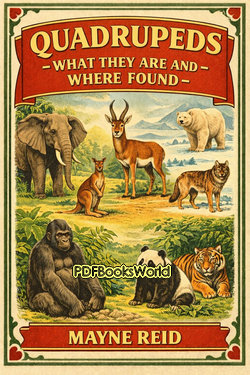
Quadrupeds, What They Are and Where Found
by Mayne Reid
Exploring the Animal Kingdom Through Quadrupeds, What They Are and Where Found
Long before wildlife documentaries and online videos became common, books were one of the best ways for children to discover animals from distant parts of the world. Quadrupeds, What They Are and Where Found by Mayne Reid introduced young readers to fascinating mammals through educational descriptions mixed with adventure and storytelling.
The book was written as an engaging zoology guide for boys, but its lively style and interesting facts can still entertain readers today. Instead of reading like a dry science textbook, the book feels more like a journey across forests, deserts, mountains, and jungles filled with remarkable animals.
What Does the Book Explore?
The word “quadruped” refers to four-footed animals, mainly mammals. The book introduces readers to creatures from many different environments and explains how they survive in the wild.
Readers encounter animals such as:
- Lions and tigers
- Bears and wolves
- Elephants and rhinoceroses
- Deer and antelope
- Foxes, monkeys, and wild cats
Each section combines zoological information with exciting descriptions of the animals’ habits and habitats.
More Than Just a Science Book
One reason the book stands out is its storytelling approach. The author avoids overly technical language and instead explains animals in a vivid and memorable way.
Adventure Mixed With Education
Many chapters feel like travel stories rather than classroom lessons. Readers are transported into jungles, grasslands, icy regions, and forests while learning how animals hunt, move, and survive.
Simple Explanations for Young Readers
The writing style makes complicated subjects easier to understand. Instead of focusing heavily on scientific terms, the book emphasizes observation and curiosity.
This approach makes the book suitable for:
- Young wildlife enthusiasts
- Students interested in animals
- Readers who enjoy classic adventure books
- Families reading together
- Beginners learning zoology
Animals From Around the World
One of the book’s most exciting features is its global perspective. Readers are introduced to creatures from continents many children may never have seen or imagined.
Creatures of the Jungle
Large predators, monkeys, and tropical animals are described with energy and excitement. The jungle sections highlight the dangers and beauty of wild environments.
Animals of Cold Regions
The book also discusses animals living in snowy climates and harsh northern environments, showing how creatures adapt to difficult weather conditions.
Desert and Grassland Wildlife
Readers learn about survival in dry climates, where speed, strength, and endurance become essential.
Educational Themes Found Throughout the Book
Although the writing is entertaining, the book also teaches important scientific and observational ideas.
Understanding Animal Behavior
The book encourages readers to think about:
- Hunting and survival
- Animal movement
- Food chains
- Adaptation to climate
- Relationships between species
These concepts help young readers develop interest in biology and ecology.
Respect for Wildlife
Even though some sections reflect the attitudes of the time period in which the book was written, the overall work encourages fascination and appreciation for animals.
Why Classic Zoology Books Still Matter
Modern readers have access to videos, documentaries, and interactive learning tools. However, classic wildlife books still offer something unique.
Encouraging Imagination
Books allow readers to picture distant landscapes and animals in their own minds. This creates a different kind of learning experience compared to visual media.
Slower and More Thoughtful Reading
Unlike fast-moving online content, older educational books encourage patience and concentration.
Historical Perspective
The book also shows how people in earlier generations studied and described animals before modern wildlife science became highly advanced.
Memorable Features of the Book
Several qualities continue to make the book interesting for modern audiences.
Exciting Descriptions
The animals are described with enthusiasm, making readers curious about the natural world.
Broad Variety of Species
The large number of mammals discussed keeps the book constantly changing and interesting.
Educational Without Feeling Boring
The combination of storytelling and science helps maintain reader attention throughout the book.
Lessons Modern Readers Can Still Appreciate
Even today, books about animals help children and adults better understand nature and wildlife conservation.
Reading Quadrupeds, What They Are and Where Found may inspire readers to:
- Learn more about zoology
- Explore wildlife documentaries and books
- Visit zoos and nature parks
- Appreciate biodiversity
- Develop curiosity about ecosystems
The book reminds readers that the animal kingdom is incredibly diverse and full of wonder.
Final Thoughts
Quadrupeds, What They Are and Where Found by Mayne Reid remains a fascinating blend of adventure writing and natural history education. Through energetic storytelling and detailed descriptions of mammals from around the world, the book transforms zoology into an exciting reading experience.
For readers interested in classic wildlife literature, animal behavior, or educational adventure books, this work continues to offer both entertainment and valuable insight into the diversity of the natural world.
Similar Genres
About the Author
Mayne Reid, born in 1818, was an Irish-American novelist whose adventurous stories captured the imagination of readers through vivid descriptions of wildlife, distant landscapes, and thrilling expeditions. Drawing upon his travels and personal experiences, he wrote extensively about the natural world, frontier life, and exploration, combining factual observation with exciting storytelling. Explore Mayne Reid books to discover the author's life, literary career, and access notable works.