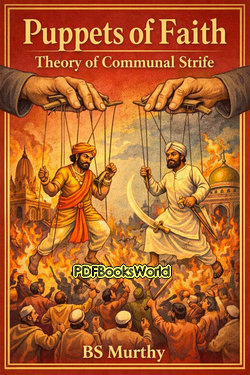
Puppets of Faith:Theory of Communal Strife
by BS Murthy
An Examination of Conflict, Belief, and Social Division
Puppets of Faith: Theory of Communal Strife by BS Murthy is a thought-provoking work that explores the origins and dynamics of communal conflict within society. The book examines how religious identity, social influences, historical grievances, and political interests can interact to create tension between communities. Rather than focusing solely on specific events, Murthy seeks to analyze the broader patterns and mechanisms that contribute to collective discord.
Through discussion and interpretation, the author encourages readers to consider the complex forces that shape communal relationships and influence social harmony.
Understanding the Roots of Communal Conflict
The book investigates how divisions between groups can emerge and become intensified over time. Murthy examines the roles played by historical memory, cultural identity, leadership, and public perception in shaping attitudes toward other communities.
By looking beyond immediate incidents, the work attempts to identify deeper causes that may contribute to recurring social tensions and misunderstandings.
Major Topics Explored
- Religious Identity: The influence of belief systems on social organization and group loyalty.
- Historical Influences: How past events can affect present relationships.
- Political Factors: The role of leadership and public discourse in shaping communal attitudes.
- Social Dynamics: Interactions between communities and the development of collective perceptions.
A Study of Human Behavior and Society
One of the book's central concerns is the way individuals can become influenced by larger social and ideological forces. Murthy explores how collective identities may affect decision-making and how narratives passed through generations can shape perceptions of both allies and rivals.
The discussion encourages readers to examine social issues critically and to consider how communities might address divisions through greater understanding and dialogue.
Themes
- Identity: The role of shared beliefs and traditions in shaping communities.
- Conflict: The causes and consequences of social divisions.
- Influence: The impact of leadership, ideas, and public narratives.
- Understanding: The importance of examining issues from multiple perspectives.
- Social Harmony: The search for conditions that support peaceful coexistence.
A Reflection on Society and Community
Puppets of Faith: Theory of Communal Strife is not simply a discussion of conflict but also an attempt to understand why divisions arise and how they persist. By exploring historical, cultural, and social factors, the book seeks to provide readers with a framework for thinking about communal relations in a broader context.
The work invites reflection on the challenges of maintaining unity within diverse societies and the importance of constructive engagement between communities.
An Analytical Exploration of Social Tensions
Puppets of Faith: Theory of Communal Strife remains a notable contribution for readers interested in social studies, cultural analysis, and the examination of communal relations. Through discussion of identity, history, and human behavior, BS Murthy presents a perspective on the forces that can divide societies as well as the importance of understanding those forces. The book encourages thoughtful consideration of how communities interact and how lasting social harmony might be pursued.
Similar Genres
About the Author
B. S. Murthy is an Indian author whose writings explore the many dimensions of human relationships, love, personal values, and social life. His novels and essays reflect a thoughtful interest in the emotional and moral choices that shape people's lives. Explore BS Murthy books to discover the author's life, literary career, and access notable works, including Bhagvad-Gita: treatise of Self-help , Stories Varied : A Book of Short Storie, Prey on the Prowl: A Crime Novel, Sundara Kanda Hanuman's Odysey , and more.