
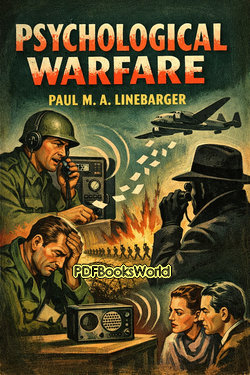
Psychological Warfare
by Paul M. A. Linebarger
Propaganda, Persuasion, and the Strategic Battle for Human Minds During Conflict
Wars are fought not only with weapons and armies, but also with information, persuasion, fear, morale, and public belief. Psychological Warfare by Paul M. A. Linebarger examines how governments, militaries, and political movements attempt to influence emotions, opinions, behavior, and decision-making during periods of conflict and international tension.
Written by a scholar deeply familiar with military strategy and political communication, the book became one of the most influential studies of psychological operations in the twentieth century.
The Meaning of Psychological Warfare
Psychological warfare involves efforts to shape the thoughts, morale, attitudes, and perceptions of opponents, allies, civilian populations, or military forces.
Rather than relying solely on physical force, psychological strategies seek to weaken resistance, encourage cooperation, create confusion, or strengthen loyalty.
The book discusses how information itself can become a strategic weapon during war and political struggle.
Influence over belief may alter outcomes as powerfully as military action.
Methods Used in Psychological Operations
Linebarger explores a wide range of techniques associated with propaganda and psychological influence.
- Radio broadcasts and public messaging
- Leaflets and printed communication
- Rumors, misinformation, and strategic deception
- Symbolism, slogans, and emotional appeals
The effectiveness of these methods often depends on understanding fear, hope, identity, and social psychology.
The Relationship Between War and Communication
The book demonstrates how modern warfare increasingly depends on mass communication systems capable of reaching enormous populations quickly.
Governments and military organizations attempt to manage information carefully because morale and public perception can influence national strength and political stability.
Psychological warfare therefore becomes closely connected with media, culture, and political ideology.
The battlefield extends into the realm of thought and emotion.
The Historical Context of the Book
Psychological Warfare emerged during the twentieth century, when world wars and ideological conflicts highlighted the growing importance of propaganda and mass persuasion.
Linebarger analyzes examples from military history while discussing the role of psychological strategy in modern conflict.
The book reflects an era when radio, newspapers, film, and international broadcasting dramatically expanded the reach of political messaging.
Information became a central element of global power.
The Writing Style of Paul M. A. Linebarger
Linebarger writes analytically but accessibly, combining military strategy, political theory, communication studies, and psychological insight.
The tone remains serious and practical, emphasizing real-world applications rather than abstract speculation.
The work balances theoretical discussion with historical examples and strategic observation.
Why Psychological Warfare Still Matters Today
Psychological Warfare remains highly relevant because modern societies continue to confront propaganda, disinformation, media influence, and strategic manipulation through rapidly evolving communication technologies.
For readers interested in military history, political communication, media studies, intelligence strategy, propaganda analysis, and modern conflict, Paul M. A. Linebarger’s work offers a foundational examination of how influence over human thought became one of the defining battlegrounds of the modern age.
Similar Genres
About the Author
Paul M. A. Linebarger was an American political scientist, military strategist, author, and professor whose work brought together the fields of international relations, communication, and psychology. He became widely respected for his studies of political conflict and the use of information during times of war. Explore Paul M. A. Linebarger books to discover the author's life, literary career, and access notable works.