
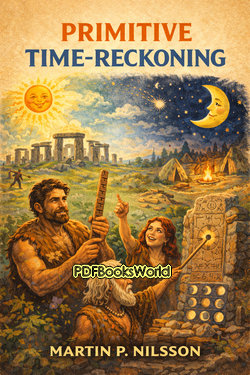
Primitive Time-reckoning
by Martin P. Nilsson
Ancient Calendars and Humanity’s First Measurements of Time
Primitive Time-reckoning by Martin P. Nilsson is an anthropological and historical study examining how early civilizations and traditional societies measured, organized, and understood time before the development of modern calendars and scientific chronology. The book explores ancient methods of tracking seasons, days, months, and years while connecting timekeeping with religion, agriculture, astronomy, and social life.
Nilsson presents time-reckoning not simply as a technical system, but as a cultural practice deeply connected with human survival, ritual, and observation of the natural world.
The Origins of Measuring Time
The book investigates how early peoples used natural cycles such as sunrise, moon phases, seasonal change, and stellar movement to organize life and establish calendars. Nilsson explains how communities dependent upon farming, hunting, and ritual ceremonies required reliable ways of predicting seasonal transitions and important recurring events.
Different cultures developed varying systems for measuring time, often combining practical observation with religious symbolism and mythological interpretation. Lunar calendars, solar cycles, and ceremonial festivals all became important parts of social organization.
Rather than viewing primitive societies as scientifically ignorant, Nilsson emphasizes their careful observation of nature and sophisticated understanding of recurring patterns.
Religion, Astronomy, and Social Life
A major theme throughout the book is the close relationship between timekeeping and religious belief. Many ancient societies connected celestial events with divine powers, sacred festivals, and ritual obligations.
The work also examines how calendars shaped political authority, agriculture, navigation, and communal identity. Time became both a practical necessity and a symbolic structure organizing human experience.
At the same time, Nilsson explores how differences in geography and environment influenced the development of distinct calendar systems across cultures.
This combination of anthropology, astronomy, and cultural history gives the work lasting scholarly importance.
Historical and Anthropological Themes Explored Throughout the Book
- Ancient Calendars: Early societies developed systems based upon lunar and solar observation.
- Astronomy and Nature: Celestial patterns guided agriculture, travel, and ritual life.
- Religion and Sacred Time: Festivals and ceremonies became linked with seasonal cycles.
- Cultural Development: Timekeeping reflected social organization and intellectual growth.
- Human Observation of the Natural World: Careful study of recurring patterns shaped civilization.
Martin P. Nilsson’s Scholarly Style
Primitive Time-reckoning demonstrates Martin P. Nilsson’s detailed and analytical approach to anthropology and ancient history. The writing remains thoughtful, organized, and strongly focused upon comparing cultures and explaining historical development through evidence and observation.
Nilsson consistently presents timekeeping as one of humanity’s earliest and most important intellectual achievements.
Why the Book Still Holds Historical Interest
Modern readers continue finding Primitive Time-reckoning valuable because it explains how ancient societies understood the passage of time long before modern scientific systems existed. The work also provides insight into the relationship between astronomy, religion, agriculture, and early human civilization.
Its themes of cultural development, natural observation, calendars, and historical anthropology continue appealing to readers interested in ancient history, comparative religion, archaeology, and the origins of scientific thought.
Similar Genres
About the Author
Martin P. Nilsson was a Swedish classical scholar, historian of religion, and archaeologist whose research transformed the study of ancient civilizations, mythology, and early religious practices. Renowned for his careful scholarship, Nilsson examined how beliefs, rituals, calendars, and social customs developed across different cultures. Explore Martin P. Nilsson books to discover the author's life, literary career, and access notable works.