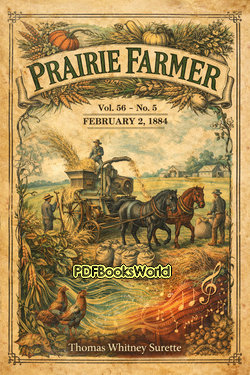
Prairie Farmer, Vol. 56 - No. 5, February 2, 1884
by Various Authors
An Important Agricultural Journal of Rural America in the 1880s
Prairie Farmer, Vol. 56, No. 5, February 2, 1884 is part of one of America’s oldest and most influential agricultural periodicals, devoted to farming, livestock management, rural economics, household advice, and agricultural innovation. Published during a period of rapid change in American agriculture, the journal provided practical information and commentary for farmers across the Midwest and expanding western regions.
The magazine reflects the daily concerns of nineteenth-century rural life, including crop production, animal care, weather conditions, machinery, market prices, and household management. Through editorials, reports, reader correspondence, and practical instruction, the publication became an essential source of knowledge for farming communities.
The volume blends agricultural education with rural culture and economic reporting.
Farming and Rural Life in the Late Nineteenth Century
This issue discusses subjects important to winter farming operations, including livestock feeding, disease prevention, crop planning, and soil preparation for the coming planting season. Agricultural journals of the era helped farmers adapt to changing techniques and market conditions.
The publication also includes market reports tracking grain and livestock prices, helping rural readers make informed financial decisions during uncertain economic periods.
In addition to farming advice, journals like Prairie Farmer often featured household instruction, rural education topics, and discussions about community life and technological progress.
The Role of Prairie Farmer in Agricultural Journalism
Prairie Farmer was founded in 1841 in Chicago and became one of the leading agricultural newspapers in the American Midwest. Its original mission focused on western agriculture, mechanics, and education, reflecting the expanding frontier economy of nineteenth-century America.
The publication served as both a practical farming guide and a communication network connecting isolated rural communities through shared knowledge and experience.
Its long publication history made it an important voice in American agricultural development.
Main Themes and Historical Importance
The issue explores themes of agricultural efficiency, rural self-sufficiency, technological advancement, livestock care, economic planning, and community cooperation. It also reflects the challenges faced by farmers during an era of industrialization and expanding national markets.
Through practical reporting and educational writing, the journal documents how agriculture shaped everyday American life during the late nineteenth century.
Why the Publication Still Holds Interest
Prairie Farmer remains historically valuable because it preserves detailed insight into farming methods, rural concerns, and agricultural economics during a transformative period in American history. Historians and researchers often use such publications to study the development of rural society and agricultural technology.
The journal also reveals how information circulated before modern communication systems transformed rural life.
Its practical detail and historical perspective continue to make it informative and culturally significant.
The Lasting Importance of Agricultural Periodicals
Nineteenth-century farming journals played essential roles in spreading agricultural innovation, market knowledge, and scientific farming methods. They helped connect farmers across large geographic regions while promoting education and modernization within rural communities.
Publications like Prairie Farmer contributed significantly to the professionalization of American agriculture and the sharing of practical farming expertise.
The continuing interest in agricultural history and rural culture helps preserve appreciation for works like this.
Final Thoughts
Prairie Farmer, Vol. 56, No. 5, February 2, 1884 is a valuable historical agricultural journal documenting the practical concerns, economic realities, and evolving technologies of rural American life during the late nineteenth century. Through farming advice, market reporting, and community discussion, the publication offers readers a vivid picture of the agricultural world that helped shape modern America.
For readers interested in agricultural history, rural studies, economic history, and nineteenth-century American culture, this volume remains both educational and historically fascinating.