
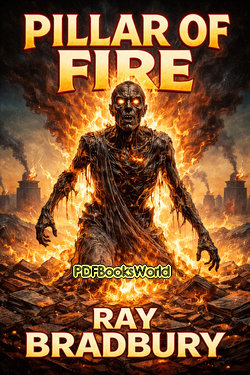
Pillar of Fire
by Ray Bradbury
Death, Resurrection, and Revenge in a Future Without Fear
Pillar of Fire by Ray Bradbury is a haunting science fiction and horror story exploring mortality, individuality, fear, and the emotional consequences of a highly controlled future society. First published in 1948, the story combines gothic atmosphere with speculative social criticism while examining what happens when humanity attempts to eliminate fear, superstition, and even death itself from civilization.
Bradbury presents the future not as a world of emotional fulfillment and freedom, but as a sterile society whose obsession with rational order has erased mystery, imagination, and the darker emotional elements of human existence.
A Man Returned from the Grave
The story follows William Lantry, a figure who rises from the dead in a future where cemeteries, religion, monsters, and traditional fears have disappeared from human culture. Awakened after centuries beneath the earth, Lantry discovers a society that no longer believes in ghosts, vampires, death symbolism, or supernatural terror.
Feeling alienated and enraged within this emotionally sanitized civilization, he seeks revenge against a humanity that has rejected everything associated with darkness, mystery, and fear.
Rather than portraying the future as triumph over ignorance alone, the work questions whether removing fear and imagination may also destroy essential aspects of emotional and cultural life.
The volume reflects Bradbury’s recurring concern that technological progress and social conformity might weaken humanity’s emotional depth and imaginative spirit.
Its tone combines gothic horror with melancholy reflection and sharp speculative irony.
The Disappearance of Fear and Mystery
A major theme throughout the story is the idea that fear and darkness remain deeply connected to human imagination, individuality, and emotional identity.
Bradbury repeatedly explores how the future society’s complete rejection of death symbolism, folklore, and superstition creates emotional emptiness and cultural sterility.
The work also reflects broader postwar anxieties concerning conformity, technological rationalism, and the suppression of emotional complexity within modern civilization.
This philosophical tension gives the story unusual emotional depth beneath its horror elements.
Science Fiction and Horror Themes Explored Throughout the Story
- Death and Resurrection: William Lantry returns from the grave into a transformed future world.
- The Loss of Imagination and Fear: Society eliminates mystery, superstition, and emotional darkness.
- Alienation and Revenge: The protagonist becomes isolated within a culture that no longer understands him.
- Technology and Emotional Sterility: Rational progress creates a world lacking mystery and symbolic meaning.
- The Gothic Within Science Fiction: Horror imagery merges with futuristic social speculation.
The story stands among Bradbury’s memorable explorations of emotional humanity confronting cold futuristic order.
The Human Need for Darkness and Wonder
One of the work’s strongest ideas is that fear, mystery, and imagination form essential parts of human emotional experience rather than merely primitive weaknesses to be eliminated.
Bradbury repeatedly demonstrates how attempts to erase darkness from culture may also erase individuality, emotional richness, and spiritual depth.
The story also reveals enduring literary fascination with monsters and the supernatural as symbolic expressions of humanity’s hidden fears and desires.
This blending of horror symbolism and social criticism gives the narrative lasting literary power.
Ray Bradbury’s Poetic and Atmospheric Style
Pillar of Fire demonstrates Ray Bradbury’s remarkable ability to combine lyrical prose, emotional symbolism, horror imagery, and speculative social commentary into deeply atmospheric storytelling.
The writing remains vivid, melancholic, and strongly focused upon mood, sensory imagery, and psychological tension.
Bradbury consistently presents the future as emotionally meaningful only when imagination and mystery survive alongside scientific progress.
Why the Story Still Holds Literary and Science Fiction Importance
Modern readers continue finding Pillar of Fire powerful because it combines classic horror themes with philosophical questions concerning modernity, emotional repression, and cultural conformity.
The story also provides insight into postwar science fiction concerns regarding technology, rationalism, and the fear that future societies might sacrifice imagination for order and efficiency.
Its themes of death, alienation, revenge, emotional emptiness, and the persistence of mystery continue resonating with readers interested in literary speculative fiction.
For readers interested in Ray Bradbury, dystopian fiction, gothic science fiction, psychological horror, speculative literature, future societies, and philosophical fantasy, this work remains haunting, imaginative, and emotionally unforgettable.
Similar Genres
About the Author
Ray Bradbury was an American author, screenwriter, and one of the most celebrated writers of twentieth-century speculative fiction. Renowned for his vivid imagination and poetic prose, Bradbury wrote across science fiction, fantasy, horror, mystery, and realistic fiction, creating stories that explored technology, human nature, memory, and the power of imagination. Explore Ray Bradbury books to discover the author's life, literary career, and access notable works.