
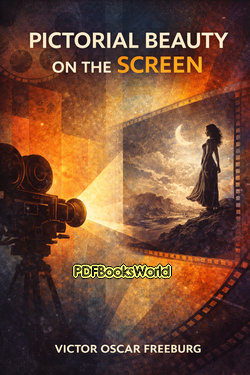
Pictorial Beauty on the Screen
by Victor Oscar Freeburg
The Art of Visual Beauty in Early Cinema
Pictorial Beauty on the Screen by Victor Oscar Freeburg is an influential study of film aesthetics that examines how motion pictures can achieve artistic beauty through composition, lighting, movement, and visual design. Written during the formative years of cinema, the book reflects a time when filmmakers and critics were striving to establish motion pictures as a legitimate art form rather than merely a technological novelty or popular amusement.
Freeburg argues that the visual qualities of a film are central to its artistic success. Just as painters arrange colors and forms on canvas, filmmakers must carefully organize images within the frame to create emotional impact, harmony, and meaning. The book therefore serves as both a critical analysis of cinema and a guide to understanding the artistic possibilities of the screen.
Its ideas helped shape early discussions about what distinguishes great filmmaking from simple visual recording.
Cinema as a Visual Art
At the heart of the book is the belief that film should be appreciated as a visual medium with its own unique artistic language. Freeburg emphasizes that motion pictures communicate not only through stories and dialogue but also through images.
The arrangement of figures, scenery, lighting, and movement within a scene can influence how audiences interpret emotions and events. By focusing attention on these visual elements, Freeburg encourages readers to look beyond plot and consider the artistic construction of the image itself.
This perspective was particularly important during an era when filmmakers were still defining the possibilities of cinematic expression.
The Elements of Screen Beauty
Freeburg identifies several factors that contribute to pictorial effectiveness in film. These principles often draw inspiration from painting, photography, and other visual arts while adapting them to the unique demands of motion pictures.
- Balanced composition within the frame.
- Effective use of light and shadow.
- Harmony between characters and surroundings.
- Movement that enhances visual expression.
By combining these elements thoughtfully, filmmakers can create scenes that are not only informative but also aesthetically pleasing and emotionally powerful.
The Influence of Painting and Photography
One of the book's most interesting themes is the relationship between cinema and earlier visual arts. Freeburg frequently compares film images to paintings, arguing that filmmakers can learn valuable lessons from artistic traditions that long predate the invention of motion pictures.
At the same time, he recognizes that cinema possesses capabilities unavailable to painters or photographers. Movement, editing, and the progression of images through time allow films to create experiences that are uniquely cinematic.
This balance between tradition and innovation forms a key part of his analysis.
Victor Oscar Freeburg's Contribution
Victor Oscar Freeburg was among the early scholars who treated cinema as a subject worthy of serious artistic and academic study. His work helped establish a vocabulary for discussing film aesthetics at a time when such discussions were still developing.
Rather than focusing exclusively on technical matters, he explored the relationship between artistic intention and audience experience. His observations encouraged filmmakers and viewers alike to think critically about visual storytelling.
This contribution helped advance the recognition of cinema as a legitimate art form.
A Window into Silent-Era Filmmaking
The book also provides valuable insight into the priorities of the silent-film era. Without synchronized dialogue, filmmakers often relied heavily on visual expression to communicate emotion, character, and narrative information.
As a result, composition, gesture, lighting, and visual symbolism became especially important. Freeburg's analysis reflects these concerns and offers modern readers a deeper appreciation for the artistry of early cinema.
His observations reveal how filmmakers sought to create meaning through images alone.
Lasting Relevance
Although cinema has evolved dramatically since the book's publication, many of Freeburg's ideas remain relevant. Modern filmmakers continue to rely on composition, lighting, color, and visual design to shape audience responses and enhance storytelling.
The principles discussed in the book can be applied to contemporary films just as readily as to silent-era productions. Its emphasis on visual beauty remains valuable in an age where digital technology has expanded the possibilities of cinematic expression.
This enduring relevance helps explain why the work continues to attract interest among students of film history and aesthetics.
Final Thoughts
Pictorial Beauty on the Screen by Victor Oscar Freeburg is a pioneering exploration of film as a visual art. By examining the principles of composition, lighting, movement, and aesthetic design, Freeburg demonstrates how cinema can achieve artistic beauty and emotional power through carefully crafted images.
For readers interested in film history, visual culture, aesthetics, and the development of cinematic theory, this book remains an important and insightful contribution to the understanding of motion pictures as an art form.
Similar Genres
About the Author
Victor Oscar Freeburg was an American educator, film theorist, and author who played an important role in the early academic study of motion pictures. At a time when cinema was emerging as a respected artistic medium, Freeburg examined how visual composition, storytelling, and dramatic presentation contributed to the power of film. Explore Victor Oscar Freeburg books to discover the author's life, literary career, and access notable works.