
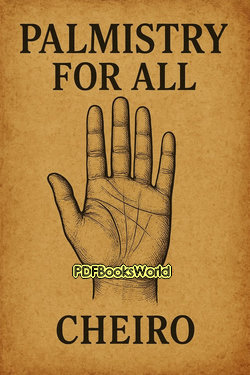
Palmistry for All
by Cheiro
Hands, Personality, and Fortune in Palmistry for All
Palmistry for All by Cheiro is one of the most famous introductory books on palm reading and fortune interpretation. First published in the early twentieth century, the book explains how lines, shapes, and markings on the hand were traditionally believed to reveal information about personality, character, emotions, and future possibilities.
Cheiro became internationally famous for popularizing palmistry among general readers and celebrities alike. His accessible writing style helped turn an ancient mystical practice into a widely discussed subject of curiosity and entertainment.
Why the Book Remains Popular
The book continues to attract readers because of its blend of mysticism, symbolism, and practical explanation. Even readers who approach palmistry as entertainment often enjoy the imaginative interpretations and personality insights presented throughout the work.
Reasons Readers Continue to Explore the Book
- Simple introduction to palm reading
- Interesting personality interpretations
- Historical fascination with fortune telling
- Mystical and symbolic themes
- Accessible and engaging writing style
The book remains one of the best-known popular works on palmistry and occult traditions.
The Main Lines of the Hand
Cheiro explains the traditional meanings associated with major palm lines such as the life line, heart line, head line, and fate line. According to palmistry traditions, these markings were believed to reflect emotional tendencies, mental traits, and major life patterns.
The shape of the fingers, mounts of the palm, and texture of the hand are also interpreted as symbols connected to personality and behavior.
Readers interested in the history of divination and occult traditions can explore Britannica’s article on divination.
Cheiro and Popular Occult Culture
Cheiro became one of the most famous occult writers of his era because of his reputation for reading the palms of political leaders, writers, and public figures. His books helped spread public fascination with fortune telling and mystical interpretation during the late nineteenth and early twentieth centuries.
The popularity of palmistry reflected a broader cultural interest in spirituality, symbolism, and hidden knowledge.
Major Themes in the Book
- Personality and self-discovery
- Symbolism and interpretation
- Mysticism and fortune telling
- Curiosity about fate and destiny
- The relationship between character and behavior
Cheiro’s Writing Style
Cheiro writes in a direct and conversational style designed for general readers rather than specialists. His explanations are simple, confident, and filled with dramatic examples intended to maintain curiosity and excitement.
The accessible presentation helped make palmistry widely known beyond small occult circles.
More about Cheiro’s life and cultural influence can be found through Thuprai’s biography of Cheiro.
The Book’s Influence on Popular Culture
Palmistry for All helped popularize palm reading in Europe and America during the twentieth century. The book influenced later works on fortune telling, astrology, and occult entertainment.
Although palmistry is not considered a scientific practice, it remains culturally significant as part of the history of mysticism and symbolic interpretation.
Readers interested in the broader history of occult practices can also visit History.com’s overview of folklore and supernatural traditions.
Final Thoughts
Palmistry for All remains an enduring example of popular mystical literature because of its accessible explanations, symbolic interpretations, and historical fascination with fortune telling. Cheiro transformed an ancient occult tradition into a widely read and culturally influential book that continues to spark curiosity today.
Similar Genres
About the Author
Cheiro, the pen name of William John Warner, was an Irish astrologer, palmist, numerologist, and author whose writings popularized the study of palmistry and the occult during the late nineteenth and early twentieth centuries. Explore Cheiro books to discover the author's life, literary career, and access notable works.