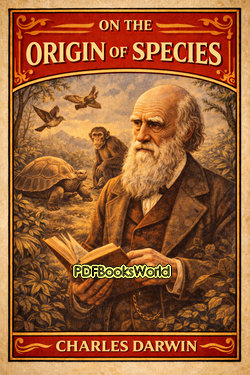
On the Origin of Species
by Charles Darwin
Charles Darwin’s Groundbreaking Work on Revolutionary Theory of Evolution
On the Origin of Species by Charles Darwin is one of the most influential scientific books ever published. Released in 1859, the work transformed humanity’s understanding of life, nature, and biological development. Through years of observation, research, and scientific reasoning, Darwin introduced the theory of evolution by natural selection, fundamentally changing the fields of biology and natural science.
The book challenged traditional beliefs about the creation of species by proposing that living organisms gradually evolve over long periods of time. Darwin argued that species adapt to their environments through inherited variations that improve survival and reproduction.
The Main Theory Behind the Book
The central idea of On the Origin of Species is natural selection. Darwin observed that individuals within a species are never completely identical. Some possess traits that make survival easier in specific environments. Over generations, these advantageous traits become more common because organisms with beneficial characteristics are more likely to survive and reproduce.
Darwin also explained that all species share common ancestry and gradually change over time. This process of adaptation and variation leads to the development of new species across millions of years.
Key Themes in On the Origin of Species
Natural Selection
Natural selection is the foundation of Darwin’s theory. Organisms best suited to their environments are more likely to survive and pass their traits to future generations. Over time, these small changes accumulate and shape the evolution of species.
Variation Within Species
Darwin emphasized that no two individuals are exactly alike. These natural variations create differences in survival and reproduction, influencing how species evolve.
The Struggle for Survival
Because resources such as food and shelter are limited, organisms compete for survival. Darwin believed this constant struggle drives evolutionary change and adaptation.
Common Descent
The book argues that all living organisms are connected through shared ancestry. According to Darwin, species gradually diverged from common ancestors over vast periods of time.
Important Lessons Readers Discover
- Species change gradually over generations
- Adaptation helps organisms survive changing environments
- Small inherited variations can shape evolution
- Nature operates through continuous competition and selection
- All living organisms are connected through common ancestry
- Scientific observation and evidence are essential for understanding life
The Historical Impact of the Book
When Darwin published On the Origin of Species, the book generated enormous debate in scientific, religious, and social circles. Many readers were shocked by the suggestion that species were not fixed and unchanging. Despite early controversy, Darwin’s ideas gradually gained widespread acceptance within the scientific community.
The book eventually became the foundation of modern evolutionary biology. Its influence extended beyond science, affecting philosophy, psychology, anthropology, and cultural discussions around the world.
Darwin’s Research and Observations
Darwin developed his theories after years of studying plants, animals, fossils, and geological formations. His voyage aboard the HMS Beagle played a major role in shaping his ideas, especially his observations of wildlife on the Galápagos Islands. Differences between similar species on separate islands helped him recognize how environmental conditions influence adaptation and evolution.
Why On the Origin of Species Still Matters Today
More than 150 years after publication, Darwin’s work remains central to modern science. Evolutionary theory continues to guide research in genetics, medicine, ecology, paleontology, and conservation biology.
Modern fossil discoveries and genetic research have provided additional evidence supporting evolutionary theory and natural selection. Scientists continue to expand upon Darwin’s original ideas while recognizing the enormous importance of his contribution to scientific thought.
Interesting Features of the Book
- Introduced the theory of evolution by natural selection
- Changed humanity’s understanding of biological life
- Based on years of scientific observation and research
- Influenced modern biology and genetics
- Combined scientific evidence with logical argument
- Remains one of history’s most important scientific texts
The Lasting Legacy of Charles Darwin
Charles Darwin’s ideas permanently transformed the study of life on Earth. His theory of evolution created a scientific framework that continues to influence research and education worldwide. Although scientific understanding has expanded since Darwin’s time, his core principles remain essential to evolutionary biology.
Readers continue to study On the Origin of Species because it represents not only a scientific achievement, but also a powerful example of observation, curiosity, and critical thinking.
Conclusion
On the Origin of Species remains one of the most important and influential books ever written. Through careful research and revolutionary ideas, Charles Darwin transformed humanity’s understanding of evolution, adaptation, and the interconnectedness of life.
For readers interested in science, history, biology, and intellectual discovery, On the Origin of Species continues to offer a fascinating and deeply significant reading experience.
Similar Genres
About the Author
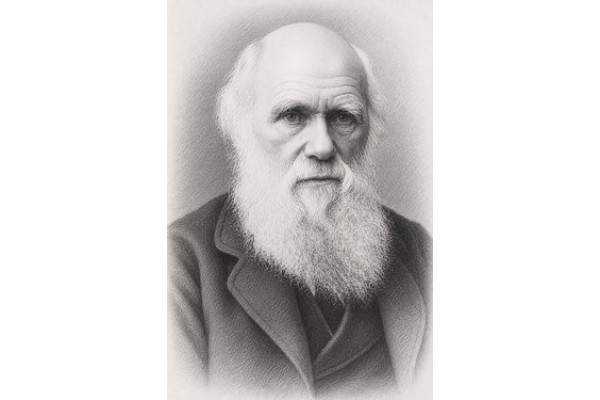
Charles Darwin was an English naturalist, geologist, and biologist whose groundbreaking work transformed humanity's understanding of the natural world. Born in Shrewsbury, England, in 1809, Darwin devoted his life to studying plants, animals, fossils, and the processes that shape life on Earth. Explore Charles Darwin books to discover the author's life, literary career, and access notable works, including The Expression of the Emotions in Man and Animals , and more.