
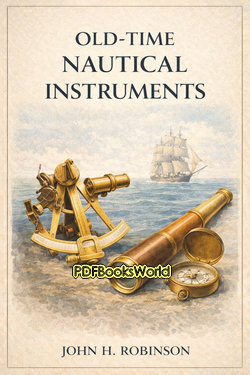
Old-Time Nautical Instruments
by John H. Robinson
Old-Time Nautical Instruments and the Fascinating History of Maritime Navigation
Long before satellites and electronic navigation systems, sailors depended on skill, observation, and carefully designed instruments to travel across oceans. In Old-Time Nautical Instruments, John Robinson explores the tools that guided mariners through dangerous seas during the great age of exploration and sailing.
The book offers readers an engaging look at historical navigation techniques and the craftsmanship behind instruments that once played a vital role in global trade, exploration, and naval history.
The Essential Tools of Early Navigation
Before modern technology, sailors relied on instruments that measured stars, angles, time, and direction to determine their position at sea. These devices required both technical precision and human expertise.
Robinson explains how navigators used tools such as sextants, astrolabes, compasses, and chronometers to travel across vast oceans with remarkable accuracy for their time.
Important Instruments Discussed in the Book
- Sextants and celestial navigation tools
- Marine chronometers and timekeeping devices
- Compasses and directional instruments
- Astrolabes and angle-measuring equipment
- Early methods of maritime navigation
The Challenge of Navigating the Seas
Ocean travel in earlier centuries was filled with uncertainty and danger. Storms, limited maps, and the absence of modern communication made accurate navigation extremely important for survival and successful voyages.
The development of nautical instruments gradually transformed maritime travel, allowing explorers and merchants to travel farther and more safely than ever before.
Major Themes Explored Throughout the Work
- The relationship between science and exploration
- The evolution of navigation technology
- Human ingenuity and craftsmanship
- The importance of observation and precision
- The growth of global maritime travel
Why Maritime History Continues to Fascinate Readers
Maritime history remains popular because it combines adventure, science, engineering, and exploration. Nautical instruments represent an important part of that history because they made long-distance sea travel possible during periods of global discovery.
The book also appeals to readers interested in antique technology and historical craftsmanship, showing how practical tools shaped world history.
Readers interested in naval exploration often explore the history of maritime navigation and exploration to better understand how sailors crossed oceans before modern navigation systems existed.
The Craftsmanship Behind Nautical Instruments
Many early navigation devices were carefully handcrafted using brass, wood, glass, and finely calibrated mechanical parts. Their accuracy depended on both scientific understanding and exceptional craftsmanship.
These instruments were not only practical tools but also remarkable examples of historical engineering and design.
Reasons the Book Still Holds Value Today
- Preserves knowledge of historical navigation methods
- Highlights scientific innovation before modern technology
- Explains the role of instruments in exploration
- Appeals to maritime and history enthusiasts
- Celebrates craftsmanship and precision engineering
The Lasting Legacy of Nautical Navigation
Although modern ships now rely on satellites and electronic systems, traditional navigation methods remain an important part of maritime heritage. Museums, collectors, historians, and sailors continue studying old nautical instruments because they represent centuries of exploration and human curiosity.
Books like Old-Time Nautical Instruments help preserve the stories and technologies that guided explorers across the world’s oceans.
Final Thoughts
Old-Time Nautical Instruments remains a fascinating exploration of maritime science, navigation, and historical craftsmanship. Through detailed explanation and historical insight, John Robinson reveals how early sailors mastered the oceans using skill, observation, and carefully designed instruments. Its lasting educational and historical value continues to attract readers interested in navigation, exploration, and maritime history.
Similar Genres
About the Author
John H. Robinson was a British maritime historian and author whose work focused on the history of navigation and the instruments that guided sailors across the world's oceans. Through careful research, he documented the tools that enabled explorers, merchants, and naval officers to travel safely long before the invention of modern electronic navigation. Explore John H. Robinson books to discover the author's life, literary career, and access notable works.