
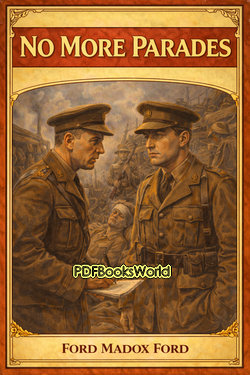
No More Parades
by Ford Madox Ford
War's Impact Beyond the Battlefield
No More Parades by Ford Madox Ford is the second novel in the acclaimed Parade's End series, a literary exploration of England during the First World War. Rather than focusing solely on combat, the novel examines how war transforms personal relationships, social institutions, and individual identities. Ford presents a world where traditional certainties are breaking apart, leaving people to navigate confusion, duty, and emotional strain.
The title itself suggests the end of old illusions. The patriotic displays and romantic notions associated with war have faded, replaced by the harsh realities of military service and social upheaval.
The Story's Central Conflict
Christopher Tietjens, an intelligent and principled army officer, struggles to balance military responsibilities with the complicated circumstances of his private life. Stationed amid the machinery of war, he faces challenges that are often as personal as they are professional. Questions of honor, loyalty, and reputation follow him wherever he goes.
As wartime pressures increase, personal relationships become increasingly difficult to maintain, revealing the emotional costs of conflict.
Characters
- Christopher Tietjens: The novel's central figure, a capable officer whose sense of duty frequently conflicts with his personal happiness.
- Sylvia Tietjens: Christopher's wife, whose volatile and complex relationship with him creates much of the novel's emotional tension.
- Valentine Wannop: An intelligent and independent woman whose connection with Christopher offers a contrast to his troubled marriage.
- General Campion: A senior military officer who represents aspects of the army's leadership and bureaucracy.
- Various Soldiers and Officers: Individuals whose experiences illustrate different responses to war and military life.
A Different Kind of War Novel
Unlike many military stories that emphasize battles and heroics, No More Parades devotes significant attention to administration, organization, and the human consequences of war. Ford reveals how vast military systems affect ordinary people, exposing inefficiencies, frustrations, and emotional burdens that rarely appear in more conventional war narratives.
This perspective gives the novel a distinctive realism.
Ideas That Shape the Narrative
Duty: Characters struggle to fulfill responsibilities despite personal sacrifices.
Honor: Questions of integrity and reputation influence many decisions.
Social Change: Traditional values are challenged by the realities of modern warfare.
Love and Conflict: Personal relationships become increasingly complicated under pressure.
The Breakdown of an Old World
Ford portrays a society in transition. The structures and assumptions that once seemed permanent are losing their authority. Class distinctions, social conventions, and established institutions face new challenges brought about by the war.
Through the experiences of his characters, the novel captures the uncertainty of an era caught between tradition and change.
Ford's Literary Style
The novel is known for its psychological depth and sophisticated narrative technique. Ford often focuses on thoughts, memories, and perceptions rather than straightforward action. This approach allows readers to understand the emotional complexity of the characters and the pressures they face.
The result is a richly textured portrait of individuals living through extraordinary circumstances.
Why Readers Continue to Study the Novel
- Provides a nuanced view of life during the First World War.
- Features one of modern literature's most complex protagonists.
- Examines the relationship between public duty and private life.
- Offers insight into the social transformations of the early twentieth century.
A Lasting Portrait of Wartime Society
No More Parades remains an important work of twentieth-century literature because it looks beyond military events to explore the human realities of war. Through Christopher Tietjens and the people around him, Ford Madox Ford presents a thoughtful examination of duty, love, social change, and personal endurance. The novel continues to resonate with readers interested in historical fiction, modernist literature, and the profound effects of conflict on everyday life.
Similar Genres
About the Author
Ford Madox Ford was an English novelist, poet, editor, and literary critic whose innovative approach to storytelling helped shape the development of modern fiction. Throughout a prolific career spanning the late nineteenth and early twentieth centuries, he explored the psychological complexities of his characters with remarkable depth and realism. Explore Ford Madox Ford books to discover the author's life, literary career, and access notable works.