
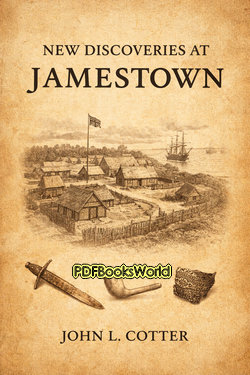
New Discoveries at Jamestown
by John L. Cotter
The Archaeological Search for America’s Earliest Colonial History
The story of Jamestown holds a central place in early American history, and New Discoveries at Jamestown by John L. Cotter and J. Paul Hudson explores how archaeology helped uncover new evidence about the first permanent English settlement in North America.
Through excavation and historical investigation, the book reveals how artifacts, structures, and buried remains transformed understanding of colonial life, survival, and the struggles faced by early settlers at Jamestown.
Rediscovering the Lost History of Jamestown
For many years, historians debated the exact location and condition of original Jamestown structures. Archaeological work eventually uncovered foundations, tools, weapons, pottery, and other artifacts that provided valuable insight into daily life within the settlement.
These discoveries helped historians move beyond written records and reconstruct the realities of early colonial experience with greater accuracy.
Important Historical Topics Explored in the Book
- The founding of Jamestown in the early seventeenth century
- Archaeological excavations and discoveries
- Daily life within the colonial settlement
- Survival challenges faced by settlers
- The relationship between archaeology and historical research
The Importance of Archaeology in Understanding History
One of the book’s most valuable contributions is showing how archaeology can reveal information that written documents alone cannot provide. Everyday objects such as cooking tools, building materials, and personal belongings offer insight into how people actually lived.
The discoveries at Jamestown also helped historians better understand issues such as disease, food shortages, trade, and conflict during the colony’s difficult early years.
Major Themes Found Throughout the Work
- The struggle for survival in a new environment
- The role of archaeology in historical discovery
- The realities of colonial life and hardship
- The interaction between settlers and environment
- The preservation of historical memory through excavation
Why Jamestown Remains Historically Important
Jamestown continues to hold major historical significance because it marked the beginning of permanent English colonization in North America. The settlement influenced later colonial expansion, economic development, and political history in what would eventually become the United States.
The archaeological discoveries discussed in the book helped deepen understanding of how fragile and uncertain the colony’s survival truly was.
Readers interested in early American history often explore the history of Jamestown and the Virginia colony to better understand the broader historical context surrounding the settlement.
How Archaeological Discoveries Changed Historical Understanding
The excavations at Jamestown demonstrated that archaeology could challenge assumptions and reveal forgotten details about the past. Material evidence often confirmed, corrected, or expanded historical narratives found in written sources.
This combination of archaeology and documentary history created a more complete picture of colonial America and the experiences of early settlers.
Reasons the Book Continues to Be Valuable
- Provides insight into archaeological research methods
- Explains early colonial history through physical evidence
- Connects historical documents with excavation findings
- Highlights the importance of historical preservation
- Appeals to readers interested in American history and archaeology
The Lasting Legacy of Jamestown Research
Research at Jamestown continues influencing historical scholarship because it demonstrates how modern investigation can recover important details about the distant past. Archaeological discoveries helped bring early colonial history to life in vivid and tangible ways.
Books like New Discoveries at Jamestown preserve the excitement and importance of uncovering hidden pieces of historical experience.
Final Thoughts
New Discoveries at Jamestown remains an important exploration of archaeology, colonial history, and historical preservation. Through careful excavation and research, John L. Cotter and J. Paul Hudson revealed new insights into one of the most significant settlements in American history. Its lasting educational value continues to attract readers interested in archaeology, exploration, and the origins of colonial America.
Similar Genres
About the Author
John L. Cotter was an American archaeologist, historian, and author who played a leading role in the development of historical archaeology in the United States. Through decades of fieldwork and research, he helped uncover important archaeological sites that revealed new details about early American history. Explore John L. Cotter books to discover the author's life, literary career, and access notable works.