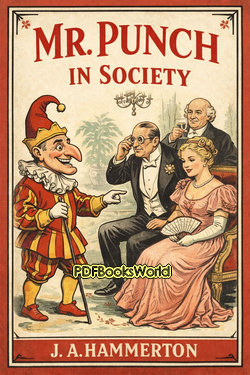
Mr. Punch In Society
by J. A. Hammerton
Victorian and Edwardian Society Seen Through Humor, Satire, and Social Observation
Elegant dinner parties, fashionable gossip, political absurdity, awkward etiquette, and the endless comedy of respectable society all come alive in Mr. Punch In Society by J. A. Hammerton. Drawing inspiration from the famous British humor magazine Punch, the book captures the wit, satire, and social commentary that made “Mr. Punch” a beloved figure in British popular culture.
The work offers readers both entertainment and a revealing portrait of social behavior during the late Victorian and Edwardian eras.
The Influence of Punch Magazine
Founded in the nineteenth century, Punch became one of Britain’s most influential humor publications. Through cartoons, comic sketches, satire, and parody, it commented on politics, fashion, class behavior, and public life.
“Mr. Punch” functioned as the magazine’s symbolic voice, observing society with playful mockery and sharp intelligence.
Mr. Punch In Society continues that tradition by focusing particularly on manners, status, and the rituals of social life.
The Comedy of Respectable Society
The humor often comes from the contrast between how people wish to appear and how they actually behave.
Readers encounter satire involving:
- Social ambition and class pretension
- Fashionable behavior and exaggerated etiquette
- Awkward conversations and public embarrassment
- The absurd rules governing polite society
The comedy remains light and playful while still exposing vanity and hypocrisy.
A Snapshot of British Social Culture
Beyond humor alone, the book preserves details of everyday social life during a period of rigid class distinctions and elaborate public manners.
Dining customs, courtship behavior, formal visits, clubs, public appearances, and fashionable trends all become subjects of observation.
Modern readers gain insight into how strongly reputation and social presentation shaped personal identity during the era.
The satire works precisely because the rules of society were taken so seriously.
Wit as Gentle Social Criticism
The book rarely attacks individuals with cruelty. Instead, it uses wit to reveal the harmless foolishness and contradictions hidden within ordinary social behavior.
Characters often become trapped by their own vanity, nervousness, or determination to appear sophisticated.
The humor encourages readers to laugh not only at society, but also at universal human weakness.
This balance between amusement and observation gives the work enduring charm.
The Style of J. A. Hammerton
Hammerton writes with lightness, timing, and appreciation for comic detail. The tone remains conversational and elegant, matching the social environments being described.
The humor depends less on dramatic plot and more on clever observation, irony, and subtle exaggeration.
This refined comic style reflects the literary traditions associated with Punch itself.
Why Mr. Punch In Society Still Entertains
Mr. Punch In Society remains enjoyable because social pretension, awkwardness, and the desire for status continue to exist in every era. Although fashions and customs change, human behavior often remains remarkably familiar.
For readers interested in British humor, social satire, Victorian culture, and classic comic observation, J. A. Hammerton’s book offers a witty and entertaining portrait of society behaving at its most self-conscious and absurd.
Similar Genres
About the Author

J. A. Hammerton, born John Alexander Hammerton, was a Scottish journalist, editor, publisher, travel writer, and author whose encyclopedic works and educational books helped bring knowledge to millions of readers during the early twentieth century. Explore J. A. Hammerton books to discover the author's life, literary career, and access notable works, including The real Argentine - Notes and Impressions of a Year in the Argentine and Uruguay , and more.