
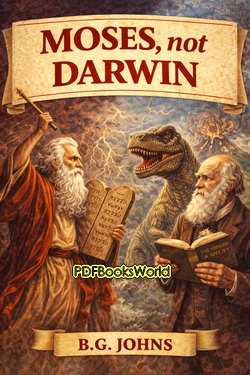
Moses, not Darwin
by B. G. Johns
A Religious Response to Evolutionary Theory and Modern Science
Moses, not Darwin by B. G. Johns is a religious and argumentative work defending Biblical creation and traditional scriptural interpretation against the growing influence of Darwinian evolutionary theory. Written during a period of intense intellectual debate, the book reflects the concerns of those who believed modern scientific ideas threatened established religious teachings and moral foundations.
The title directly contrasts Moses, representing the Biblical account of creation, with Charles Darwin, whose theory of evolution transformed scientific understanding of life and natural history. Through religious reasoning and criticism of evolutionary ideas, the work examines questions about creation, authority, faith, and scientific interpretation.
The book belongs to the larger nineteenth-century debate between theology and modern science.
Defending Biblical Creation Against Evolution
The work argues in favor of the Biblical account of creation while challenging Darwinian explanations of human origins and biological development. B. G. Johns discusses whether evolutionary theory conflicts with scripture and whether scientific conclusions should override religious belief.
The book reflects concerns that acceptance of evolution might weaken moral values, spiritual faith, or confidence in religious authority. Biblical history and divine creation are presented as foundations for understanding humanity and the natural world.
The debate reveals the broader cultural struggle created by rapid scientific and intellectual change during the nineteenth century.
The Direct and Religious Style of B. G. Johns
B. G. Johns writes in a forceful and persuasive style emphasizing scriptural interpretation, moral concern, and criticism of modern scientific theories. The language reflects the passionate religious debates common during the era.
The work combines theological reasoning with argument against evolutionary explanations, encouraging readers to defend traditional belief against what the author viewed as dangerous intellectual trends.
Johns’s approach reflects the determination of many religious writers to preserve Biblical authority during a period of growing scientific influence.
Main Themes and Intellectual Questions
The book explores themes of creation, evolution, faith, religious authority, scientific theory, and the relationship between scripture and reason. It also reflects broader debates about morality, truth, and cultural change.
Through its arguments, the work examines whether scientific discoveries should alter long-established religious interpretations of human origins and natural history.
Why the Book Still Holds Historical Interest
Moses, not Darwin remains historically significant because it documents religious reactions to evolutionary theory during one of the most transformative intellectual periods of modern history. Readers interested in the history of science and religion often study such works to understand how communities responded to Darwin’s ideas.
The book also illustrates the cultural tensions created when scientific progress challenged traditional systems of belief and authority.
Its arguments continue to reflect enduring debates about faith, science, and education.
The Lasting Importance of Evolution Debates
The publication of Darwinian theory changed scientific and philosophical discussions throughout the modern world. Questions about creation, human origins, and the interpretation of scripture became major public controversies in religion, education, and politics.
Works defending Biblical creation reveal how many individuals sought to preserve spiritual certainty during periods of rapid intellectual transformation.
The continuing discussion surrounding science and religion helps preserve the historical importance of books like this.
Final Thoughts
Moses, not Darwin by B. G. Johns is a historically important religious response to evolutionary theory and modern scientific thought. Through theological argument and criticism of Darwinism, the work reflects the deep cultural and intellectual debates surrounding faith, creation, and scientific progress during the nineteenth century.
For readers interested in religious history, scientific controversy, philosophy, and the history of evolutionary debate, this work remains both informative and historically revealing.
Similar Genres
About the Author
B. G. Johns was a nineteenth-century religious writer whose published works reflect the lively discussions that emerged as scientific discoveries and traditional religious beliefs were increasingly debated in the Victorian era. Explore B. G. Johns books to discover the author's life, literary career, and access notable works.