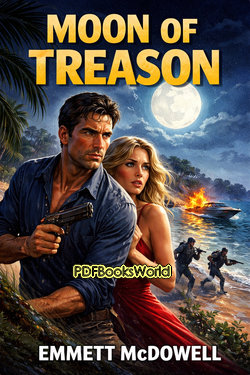
Moon of Treason
by Emmett McDowell
Loyalty, Rebellion, and Political Intrigue on a Distant Moon
Moon of Treason by Emmett McDowell is a fast-moving science fiction adventure exploring betrayal, political conflict, survival, and rebellion within a futuristic lunar society. Written during the golden age of pulp science fiction, the story combines interplanetary intrigue, dangerous conspiracies, and action-driven suspense while examining the fragile nature of loyalty and power in isolated frontier civilizations beyond Earth.
McDowell presents the Moon not merely as a scientific outpost, but as a tense political environment where ambition, secrecy, and competing interests threaten both stability and human survival.
A Dangerous Lunar Conspiracy
The story unfolds on a strategically important lunar colony or settlement where tensions between authorities, rebels, and hidden enemies begin escalating toward open conflict. Suspicion and betrayal spread rapidly as characters uncover conspiracies capable of reshaping political control over the Moon and possibly affecting relations across the Solar System.
Within this isolated extraterrestrial environment, survival depends not only upon technology and physical endurance, but also upon determining whom to trust in a society shaped by fear and hidden agendas.
As danger intensifies, the protagonists are forced into difficult choices involving loyalty, personal morality, and resistance against treachery operating beneath the surface of official order.
Rather than portraying future civilization as peaceful and unified, the novel emphasizes political instability, human ambition, and the persistence of conflict even in advanced technological societies.
The volume reflects mid-twentieth-century fascination with space colonies, frontier politics, and Cold War-era fears concerning espionage and betrayal.
Its tone combines suspense, adventure, urgency, and speculative imagination.
Characters
- The Lunar Hero: A courageous figure attempting to expose treason and survive dangerous political conflict.
- The Conspirators: Secretive individuals whose ambitions threaten the stability of the lunar colony.
- Military and Political Authorities: Officials struggling to maintain order amid growing suspicion and unrest.
- Allies and Survivors: Supporting characters forced to choose between loyalty, fear, and self-preservation.
The Fear of Betrayal in Isolated Societies
A major theme throughout the story is the destructive power of mistrust within isolated and highly dependent communities. McDowell repeatedly explores how secrecy and political manipulation can destabilize even technologically advanced societies.
The work also reflects broader anxieties of the atomic and Cold War periods, when espionage, ideological conflict, and hidden enemies became central themes within popular fiction.
This atmosphere of uncertainty gives the narrative much of its dramatic intensity.
Science Fiction Themes Explored Throughout the Story
- Lunar Colonization and Frontier Society: The Moon becomes a politically unstable extension of human civilization.
- Treason and Political Conspiracy: Hidden plots threaten social order and security.
- Survival in Isolated Environments: Characters face both human and environmental dangers.
- Technology and Power: Advanced systems become tools of control, defense, and conflict.
- Loyalty and Moral Choice: Individuals must decide where their true allegiance lies.
The novel reflects many classic elements associated with politically charged pulp science fiction.
The Fragility of Human Trust
One of the work’s strongest ideas is that civilization remains vulnerable when fear and ambition weaken trust between individuals and institutions.
McDowell repeatedly demonstrates how isolated societies may become especially susceptible to paranoia, manipulation, and betrayal because survival depends heavily upon cooperation.
The novel also reveals enduring science fiction fascination with frontier colonies where political tension and survival pressures expose deeper aspects of human nature.
This combination of action and psychological conflict gives the story lasting pulp-era appeal.
Emmett McDowell’s Energetic Adventure Style
Moon of Treason demonstrates Emmett McDowell’s ability to combine futuristic settings, political suspense, and rapid storytelling into entertaining speculative adventure fiction.
The writing remains vivid, direct, and strongly focused upon maintaining movement, tension, and danger throughout the narrative.
McDowell consistently presents outer space as a frontier where human conflict follows civilization beyond Earth.
Why the Story Still Holds Science Fiction Interest
Modern readers continue finding Moon of Treason entertaining because it captures the excitement and political tension associated with classic mid-century space adventure fiction.
The story also provides insight into the era’s fascination with lunar colonies, futuristic politics, espionage themes, and technological frontier societies during the early decades of the space age imagination.
Its themes of loyalty, conspiracy, survival, and rebellion continue appealing to readers who enjoy vintage science fiction filled with action and political intrigue.
For readers interested in pulp science fiction, lunar adventures, political conspiracies, space colonies, futuristic rebellion, and classic interplanetary fiction, this work remains suspenseful, imaginative, and dramatically engaging.
Similar Genres
About the Author
Emmett McDowell was an American science fiction author whose imaginative stories explored space travel, alien civilizations, and humanity's future among the stars. Writing during the Golden Age of science fiction, McDowell created fast-paced adventures that combined scientific speculation with compelling action and memorable characters. Explore Emmett McDowell books to discover the author's life, literary career, and access notable works, including The Outcasts of Solar III , and more.