
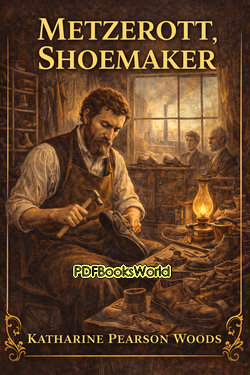
Metzerott, Shoemaker
by Katharine Pearson Woods
Labor, Justice, and the Search for Social Harmony
Metzerott, Shoemaker by Katharine Pearson Woods is a socially conscious novel that explores the lives of working-class immigrants, the relationship between labor and capital, and the moral responsibilities of society. First published during the late nineteenth century, the book reflects growing concerns about industrialization, economic inequality, and the conditions faced by workers in rapidly expanding cities.
Combining storytelling with social commentary, Woods examines how individuals and communities respond to the challenges created by a changing economic landscape.
A Craftsman at the Heart of the Story
The central figure, Metzerott, is a shoemaker whose daily work places him within the struggles and aspirations of ordinary laborers. Through his experiences, readers encounter questions about fairness, opportunity, and the value of honest work. His character serves as a lens through which broader social issues are explored.
The novel presents labor not merely as a means of earning a living but as an important source of dignity and personal identity.
Characters
- Metzerott: A hardworking shoemaker whose integrity and values shape the narrative.
- Working Families: Men and women striving for stability and a better future.
- Employers and Business Figures: Individuals representing the economic forces influencing society.
- Neighbors and Community Members: People whose lives intersect with the social issues explored in the novel.
The Reality of Industrial Society
The story unfolds during a period when industrial growth was transforming everyday life. Factories, urban expansion, and increased immigration created new opportunities but also new hardships. Workers often faced difficult conditions, uncertain employment, and limited economic security.
Woods uses these realities as the foundation for a narrative that examines both individual experiences and wider social concerns.
Major Themes
- Dignity of Labor: Respect for skilled work and honest effort.
- Social Justice: The search for fairness in economic relationships.
- Community Support: The importance of cooperation and mutual assistance.
- Moral Responsibility: The obligation to consider the welfare of others.
Reform Through Understanding
Rather than presenting society as divided into simple heroes and villains, the novel encourages understanding between different groups. Woods explores how employers, workers, and communities might address conflicts through compassion, ethical behavior, and constructive reform.
This approach reflects the author's belief that social progress depends upon both justice and cooperation.
A Novel with a Social Purpose
Like many reform-oriented novels of its era, Metzerott, Shoemaker seeks to do more than entertain. It invites readers to reflect on economic conditions, labor relations, and the responsibilities people owe one another. The story uses fiction as a means of encouraging thoughtful discussion about real-world issues.
Its social concerns remain relevant to readers interested in the history of work and reform movements.
A Valuable Historical Perspective
Modern readers can view the novel as both literature and a historical document. It captures attitudes, concerns, and debates that shaped late nineteenth-century society. The book provides insight into how writers and reformers responded to the opportunities and challenges created by industrialization.
These historical dimensions add depth to the narrative and increase its significance beyond the immediate story.
Why Readers Continue to Appreciate the Novel
- Offers a thoughtful portrayal of working-class life.
- Explores enduring questions about labor and fairness.
- Combines engaging storytelling with social commentary.
- Provides insight into reform movements of the nineteenth century.
A Story of Work and Human Dignity
Metzerott, Shoemaker remains an important example of socially engaged fiction. Through the experiences of its central character and the community around him, Katharine Pearson Woods examines the relationship between labor, morality, and social responsibility. The novel continues to interest readers because it addresses issues that remain meaningful while offering a vivid portrait of life during a transformative period in history.
Similar Genres
About the Author
Katharine Pearson Woods was an American novelist, poet, translator, and editor whose writings combined literary grace with thoughtful reflections on faith, family, and everyday life. She produced a wide range of works that included novels, children's literature, poetry, and translations, earning recognition for her ability to portray ordinary people with warmth and psychological insight. Explore Katharine Pearson Woods books to discover the author's life, literary career, and access notable works.