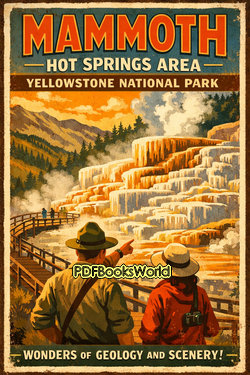
Mammoth Hot Springs Area
by Anonymous
An Informative Guide to One of Yellowstone's Most Remarkable Landscapes
Mammoth Hot Springs Area by Anonymous is a descriptive guide to one of the most distinctive geothermal regions within Yellowstone National Park. Focusing on the famous hot springs, terraces, and geological formations of Mammoth Hot Springs, the work introduces readers to the natural processes that have created this extraordinary landscape. Combining scientific explanation with practical information, the guide helps visitors appreciate both the beauty and significance of the area.
A Unique Geothermal Wonderland
Mammoth Hot Springs is unlike any other section of Yellowstone. Instead of the geysers commonly associated with the park, the area is known for its extensive limestone terraces formed by mineral-rich hot water emerging from underground sources. Over thousands of years, these waters have deposited layers of travertine, creating a constantly changing landscape of terraces, pools, and intricate formations.
The result is one of the most visually striking natural features in North America.
Highlights of the Area
- Travertine Terraces: Layered mineral formations created by geothermal activity.
- Hot Springs: Pools of heated groundwater rich in dissolved minerals.
- Boardwalk Trails: Routes that allow visitors to explore the formations safely.
- Scenic Overlooks: Locations offering panoramic views of the terraces and surrounding landscape.
- Wildlife Habitats: Areas frequented by elk and other Yellowstone animals.
The Science Behind the Springs
The geological processes responsible for Mammoth Hot Springs differ from those found in many other geothermal regions. Water heated deep beneath the surface dissolves limestone as it rises. When the water reaches the surface, carbon dioxide escapes and minerals are deposited, gradually building the famous terraces.
Because these processes continue today, the appearance of the springs changes over time.
The Role of Color and Microorganisms
Many of the springs display striking colors ranging from white and cream to orange, brown, and green. These colors are often produced by heat-loving microorganisms that thrive in the mineral-rich waters. Variations in temperature and water flow influence which organisms can survive in different locations.
This interaction between geology and biology contributes to the area's remarkable appearance.
A Historical Destination
Mammoth Hot Springs has attracted explorers, scientists, and tourists for generations. As one of Yellowstone's most accessible and famous features, it has played an important role in the history of the national park. Visitors have long been fascinated by the unusual formations and the scientific questions they inspire.
The area continues to be one of the park's most frequently visited attractions.
The Importance of Conservation
The guide emphasizes the need to protect geothermal features from damage. The delicate terraces can be easily harmed by human activity, making responsible visitation essential. Boardwalks and designated paths help preserve the landscape while allowing visitors to observe it closely.
Conservation efforts ensure that future generations can enjoy and study these unique natural wonders.
Why the Area Remains Fascinating
Few places combine geological activity, natural beauty, and scientific interest as effectively as Mammoth Hot Springs. Its constantly evolving formations provide a visible reminder of the powerful forces operating beneath the Earth's surface.
The area remains a favorite destination for travelers, photographers, naturalists, and anyone interested in the wonders of geology.
A Guide to Yellowstone's Living Landscape
Mammoth Hot Springs Area offers readers an informative introduction to one of Yellowstone National Park's most extraordinary geological features. Through explanations of geothermal activity, descriptions of the terraces, and discussions of conservation, the guide highlights the beauty and scientific importance of this remarkable landscape. It remains a valuable resource for visitors seeking a deeper understanding of one of nature's most fascinating creations.